


What's Happening?
The Government of the Republic of Korea and the United Nations Development Programme/Programme of Assistance to the Palestinian People (UNDP/PAPP) have launched the second phase of the R.E.V.I.V.E Project, known as R.E.V.I.V.E II. This initiative, funded
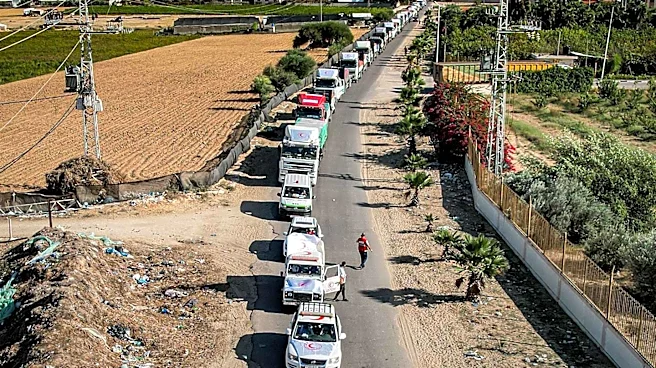
with USD 7.76 million, aims to support crisis-affected Palestinian communities in Gaza by advancing an integrated approach to early recovery. R.E.V.I.V.E II will focus on connecting transitional shelter with essential services and neighborhood-level interventions, moving beyond addressing shelter needs in isolation. This new phase builds on the achievements of R.E.V.I.V.E I, which provided shelter through wooden tents and Relief Housing Units (RHUs), deployed RHUs as medical service points, and supported access to water and sanitation. The program is also designed to contribute to UNDP’s broader Gaza Neighborhood Programme, which integrates transitional shelter, debris removal, basic infrastructure, essential services, and livelihoods support within the same communities.
Why It's Important?
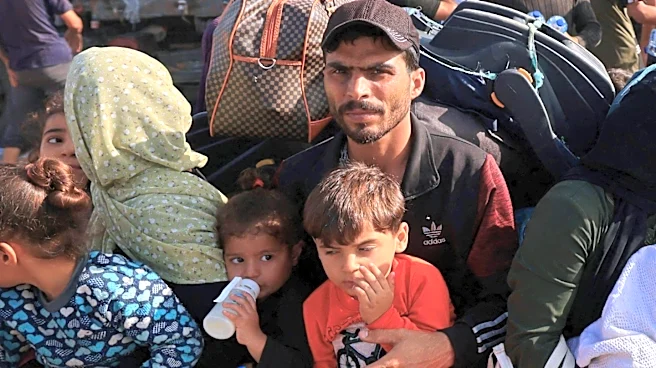
The launch of R.E.V.I.V.E II is important because it signifies a continued commitment to long-term recovery and resilience-building in Gaza, moving beyond immediate humanitarian relief. By integrating transitional shelter with essential services like water, sanitation, health, and education, the program addresses the multifaceted needs of communities affected by conflict. This holistic approach is crucial for restoring dignity and enabling people to remain in or return to their communities under safer conditions. The substantial funding from the Republic of Korea, amounting to USD 7.76 million, highlights the international community's recognition of the severe and ongoing challenges faced by Palestinians in Gaza. This initiative also serves as a model for how early recovery programming can bridge the gap between emergency response and sustainable development, fostering community-level recovery that is essential for long-term stability and well-being in post-conflict settings.
What's Next?
R.E.V.I.V.E II will proceed with its integrated approach, focusing on connecting transitional shelter with essential services and neighborhood-level interventions. The program will continue to build on the lessons learned from R.E.V.I.V.E I, which included debris collection and reuse for infrastructure rehabilitation. Specific activities will likely involve the construction of more transitional shelters, the establishment of medical service points, and improvements in water and sanitation infrastructure. Additionally, the program will provide winterization support during the critical period, as highlighted by Young K. Koh, Head of the Representative Office of the Republic of Korea to Palestine. UNDP/PAPP will continue to coordinate with local communities and partners to ensure that the interventions are responsive to the most pressing needs. The long-term goal is to restore the conditions that make neighborhoods functional and support the overall recovery of crisis-affected communities in Gaza.
Beyond the Headlines
The R.E.V.I.V.E II project, while focused on tangible recovery efforts, also carries deeper implications for international development and humanitarian aid. The emphasis on an integrated approach, linking shelter with essential services and community-level interventions, reflects a growing understanding that fragmented aid efforts are often less effective in complex emergencies. This model suggests a shift towards more comprehensive and sustainable recovery strategies that empower communities rather than simply providing temporary fixes. The partnership between the Republic of Korea and UNDP also underscores the importance of international cooperation and sustained donor engagement in protracted crises. However, the immense scale of needs in Gaza, as noted by Jaco Cilliers of UNDP/PAPP, indicates that even significant contributions like R.E.V.I.V.E II are part of a much larger, ongoing effort. This highlights the persistent challenges of achieving full recovery and resilience in regions marked by prolonged conflict and political instability.