




What's Happening?
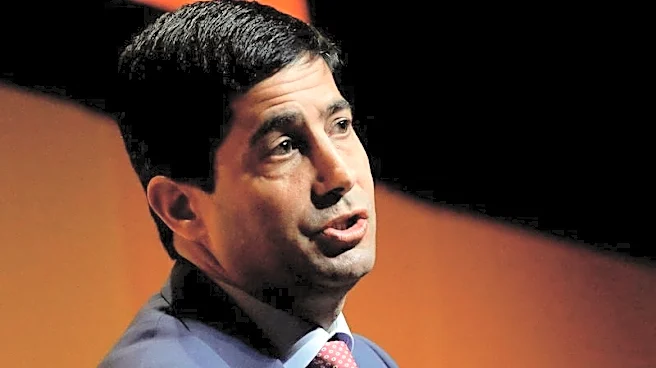
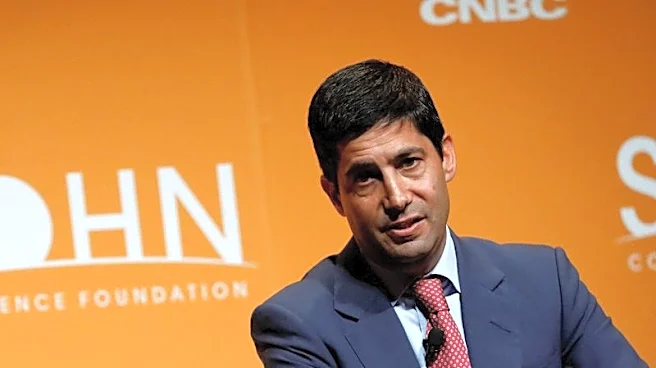
Kevin Warsh, nominated by President Trump to lead the Federal Reserve, has filed financial disclosures indicating assets exceeding $100 million. These disclosures are a prerequisite for his Senate confirmation. Warsh's investments include significant
holdings in the Juggernaut Fund and consulting fees from Stanley Druckenmiller's investment office. His filings reveal a complex portfolio with confidentiality agreements, pledging to divest certain assets if confirmed. Warsh's spouse, Jane Lauder, also holds substantial assets, linked to the Estee Lauder company. The Senate Banking Committee is yet to schedule a hearing, and Warsh's confirmation is complicated by a DOJ investigation into current Fed Chair Jerome Powell, which a federal judge has recently quashed.
Why It's Important?
Warsh's nomination and the associated financial disclosures bring attention to the ethical considerations of wealth in public office. The complexity and scale of his assets could pose potential conflicts of interest, influencing his decisions on monetary policy. The ongoing investigation into Powell adds a layer of uncertainty, potentially affecting the timing and outcome of Warsh's confirmation. This situation highlights the challenges of ensuring transparency and accountability in high-level government appointments, with implications for the Federal Reserve's credibility and the broader economic policy landscape.
What's Next?
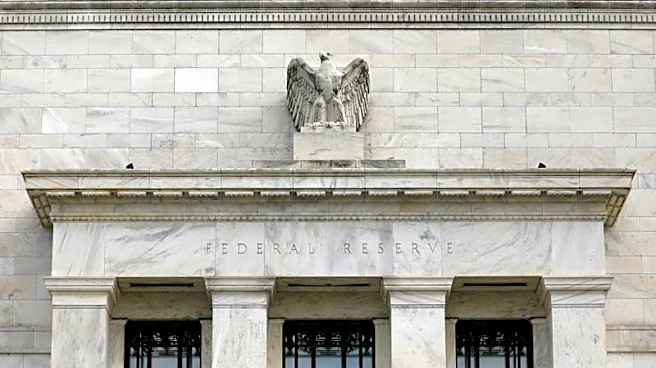
The Senate Banking Committee must review Warsh's nomination, with a hearing expected soon. However, the confirmation process may be delayed due to the unresolved investigation into Powell. If Warsh is not confirmed by May 15, Powell may continue as Fed Chair temporarily. The resolution of the DOJ investigation and the Senate's actions will be pivotal in determining the Federal Reserve's leadership, impacting future economic policy and market stability.