





What's Happening?
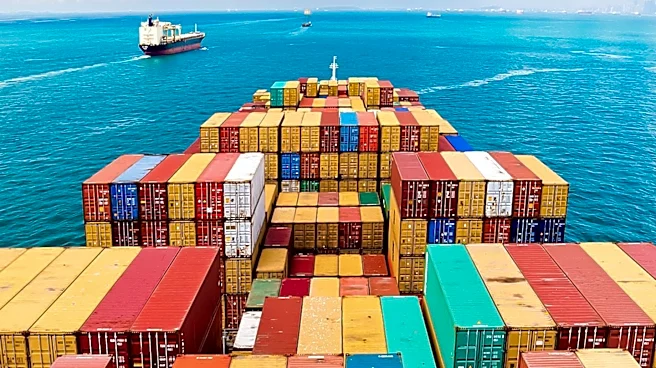
The Danube River's record-low water levels are straining grain exports from the Black Sea region, particularly affecting flows through Romania. This comes as Russian military strikes divert Ukrainian grain from key ports like Odesa. The Black Sea is crucial
for global wheat exports, and disruptions are raising concerns about food supply reliability. Romania's Constanta port, a vital alternative for Ukrainian grain exports, is facing logistical challenges due to reduced river freight capacity. The situation is exacerbated by increased transportation costs and delays, impacting European Union grain shipments.
Why It's Important?
The disruption of grain exports from the Black Sea region has significant implications for global food security. As Russia and Ukraine are major wheat exporters, any constraints on their export capabilities can lead to increased food prices and supply shortages worldwide. The logistical challenges faced by Romania's Constanta port highlight the vulnerability of alternative export routes, emphasizing the need for robust infrastructure to support global trade. The situation also underscores the impact of geopolitical conflicts on civilian industries, with potential long-term effects on agricultural markets and international trade.
What's Next?
Efforts to address the logistical challenges may include seeking alternative export routes and enhancing infrastructure to support grain shipments. The European Commission's Solidarity Lane project aims to establish alternatives to Black Sea shipping routes, but current capacity limitations remain a concern. As Romania anticipates a record harvest, competition for transportation resources may intensify, potentially leading to further delays and increased costs. Stakeholders may need to explore innovative solutions to mitigate the impact of geopolitical tensions and environmental factors on global food supply chains.