






What's Happening?
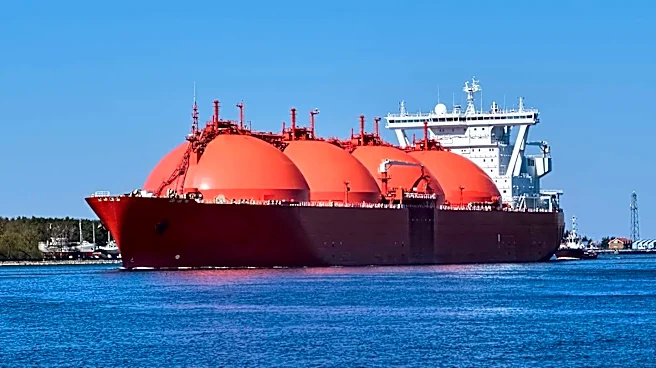
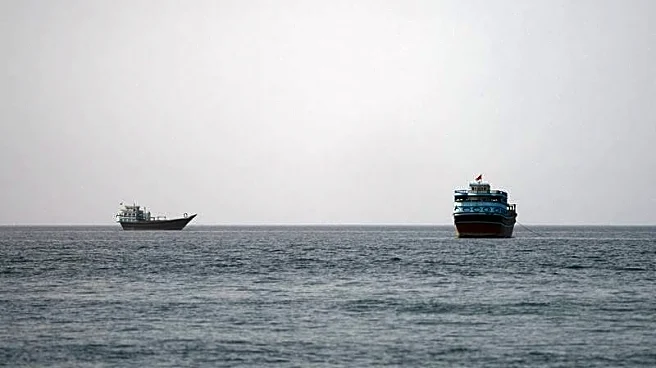
Oil transfers between tankers in the Gulf of Oman have slowed significantly following a series of attacks on vessels by Iranian forces. Satellite imagery and maritime sources indicate a reduction in ship-to-ship (STS) transfers, a method used to facilitate
oil exports from the Gulf despite threats to commercial vessels in the Strait of Hormuz. The U.S. military has been assisting with these transfers to maintain Gulf energy exports, employing drones and helicopters to guide tankers. However, recent satellite data shows a decrease in STS activity, with only one pair of tankers involved in such transfers as of July 18, compared to three pairs a week earlier. The U.S. Energy Secretary has assured continued traffic through the strait, despite Iranian threats and attacks.
Why It's Important?
The slowdown in oil transfers has significant implications for global energy markets, as the Strait of Hormuz is a critical chokepoint for oil shipments. The reduction in STS transfers could lead to disruptions in oil supply, potentially affecting global oil prices. The U.S. military's involvement underscores the strategic importance of maintaining open shipping lanes in the region. However, the safety concerns raised by Iranian attacks may deter shipping companies from participating in U.S.-guided transit schemes, potentially exacerbating supply issues. The situation highlights the geopolitical tensions in the region and their impact on global energy security.
What's Next?
The U.S. is likely to continue its efforts to ensure safe passage through the Strait of Hormuz, possibly increasing military presence or diplomatic efforts to mitigate Iranian threats. Shipping companies may seek alternative routes or methods to ensure the safety of their vessels and cargo. The international community may also engage in diplomatic discussions to address the security concerns in the region. The ongoing situation will require close monitoring to assess its impact on global oil markets and regional stability.