



What's Happening?
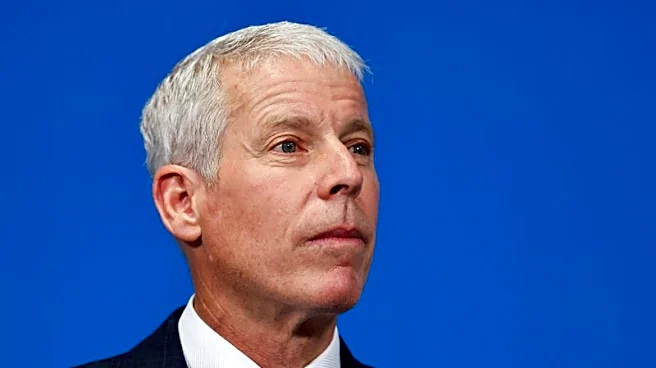
U.S. Senate Ag Committee Chairman John Boozman has indicated that a Senate floor vote for the 2026 Farm Bill is unlikely to occur before the November midterm elections. This sentiment is echoed by Gary Adams, CEO of the National Cotton Council, who notes
the bill is not currently on the Senate's floor calendar. Both Boozman and Adams suggest that action on the Farm Bill will likely be pushed into the lame-duck session following the elections. Boozman is urging leaders of the House and Senate Agriculture Committees to utilize the upcoming recess for continued negotiations. The goal is to build a comprehensive package that can secure passage in both chambers of Congress before the end of the year. The timing of the lame-duck session's effectiveness for the Farm Bill may largely depend on the outcomes of the November midterm elections, according to Adams.
Why It's Important?
The delay in the Farm Bill's passage has significant implications for the U.S. agricultural sector, which relies on the legislation for critical programs, subsidies, and policy direction. Farmers, ranchers, and agricultural businesses face uncertainty regarding future support, risk management tools, and conservation initiatives. The Farm Bill influences commodity prices, food production, and rural development, making its timely enactment crucial for economic stability in agricultural communities. A prolonged delay could disrupt planning cycles for farmers and impact their ability to make long-term investments. Furthermore, the bill often includes provisions related to food security and nutrition programs, affecting millions of Americans. The potential for the bill to be shaped during a lame-duck session, influenced by post-election political dynamics, could lead to different outcomes than if it were debated and passed before the elections, potentially altering the balance of benefits and responsibilities across various agricultural stakeholders.
What's Next?
The immediate next step involves leaders of the House and Senate Agriculture Committees using the upcoming recess to continue negotiations on the Farm Bill. The aim is to develop a package that can garner sufficient support for passage in both chambers. Following the November midterm elections, the focus will shift to the lame-duck session, where the bill is expected to be brought to the floor. The political landscape post-midterms will likely play a crucial role in shaping the final version of the Farm Bill and its chances of success. Stakeholders, including agricultural organizations like the National Cotton Council, will be closely monitoring these negotiations and advocating for their interests. There is also a possibility that other legislative priorities, such as the 'Buy American Cotton Act,' could be attached to the Farm Bill or another large bill during this period.
Beyond the Headlines
The deferral of the Farm Bill to a lame-duck session highlights the increasing political complexities and partisan divisions within Congress, making it challenging to pass significant legislation in a timely manner. This trend can create an environment of legislative uncertainty, impacting not only the agricultural sector but also other industries dependent on federal policy. The reliance on post-election sessions for critical bills can lead to less transparent processes and potentially less public input, as lawmakers may be less accountable to voters after elections. Moreover, the Farm Bill's comprehensive nature, encompassing everything from crop insurance to conservation and food assistance, means that delays can have cascading effects across various societal and economic domains, underscoring the interconnectedness of agricultural policy with broader national interests and well-being.