








What's Happening?
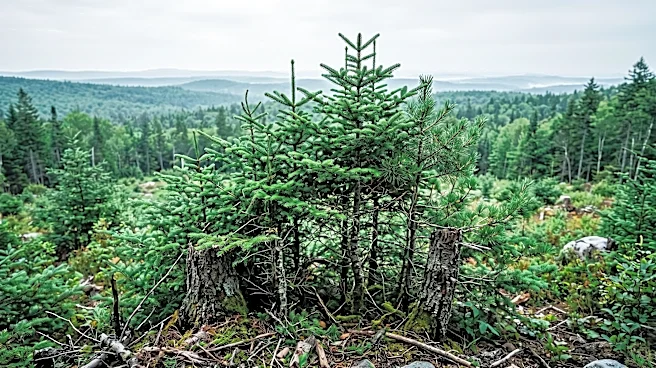
Maine has launched the WoodsWISE Resilience Program, an initiative designed to support private woodland owners in climate-focused stewardship. This program, which has seen over 150 participants since March, provides financial incentives and expert guidance
to landowners managing between 10 and 1,000 acres of forest. Participants work with consulting foresters to develop individualized 10-year practice plans, focusing on activities such as invasive species removal, thinning overcrowded young forests, and removing diseased trees. The program aims to reimburse 60% to 90% of the financial burden for landowners, potentially offering up to $20,000 per participant. Funding for the WoodsWISE Resilience Program comes from two grants totaling $9 million, provided by the Inflation Reduction Act and the U.S. Forest Service Landowner Support Program. This effort is part of Maine's broader 'Maine Won’t Wait' climate action plan, which seeks to drastically reduce greenhouse gas emissions and strengthen climate resiliency.
Why It's Important?
Maine's WoodsWISE Resilience Program is significant for its dual impact on environmental sustainability and economic stability within the state. With 94% of Maine's 18 million acres of forest privately owned, engaging individual landowners is crucial for achieving climate goals. The program directly contributes to carbon sequestration, as Maine's forests already offset at least 60% of the state's annual greenhouse gas emissions. By offering financial incentives, the program reduces the economic barrier for landowners to adopt sustainable forestry practices, thereby protecting the watershed, soil, and biodiversity. Economically, the timber industry in Maine generated $8.3 billion in 2024 and supports 29,000 jobs. This initiative helps sustain this vital industry while transitioning towards a more climate-resilient bioeconomy. The program also highlights a strategic approach to climate action, demonstrating how individual actions, supported by government programs and international collaborations, can collectively contribute to larger environmental and economic objectives.
What's Next?
The WoodsWISE Resilience Program is expected to expand, with another program set to open later this year that will feature a higher landowner cap, indicating a continued commitment to engaging more private woodland owners in climate stewardship. Maine will also continue its formal collaboration with Finland, a partnership established in 2019, to exchange sustainable stewardship strategies and build strong bioeconomies. This collaboration provides valuable insights into advanced forest management and bioeconomy development, drawing from Finland's extensive experience. Research initiatives, such as the University of Maine’s Tech Hub, which received a $20 million award from the U.S. Economic Development Administration, will further explore converting low-value wood into sustainable products like fuel and packing materials. These ongoing efforts aim to strengthen domestic manufacturing, reduce reliance on carbon-intensive materials, and diversify Maine's energy portfolio, particularly by replacing fossil fuels for home heating with low-value wood byproducts.
Beyond the Headlines
The WoodsWISE Resilience Program and Maine's broader climate strategy underscore a shift towards integrating environmental goals with economic development, particularly through the concept of a bioeconomy. This approach recognizes that sustainable resource management can create new industries and jobs while addressing climate change. The collaboration with Finland highlights the importance of international 'peer exchange' in developing effective climate solutions, demonstrating that lessons learned from other nations with similar ecological and economic profiles can accelerate progress. Furthermore, the program's focus on private landowners emphasizes the critical role of individual action and local communities in achieving large-scale environmental objectives. This model could serve as a blueprint for other states with significant private landholdings, illustrating how financial incentives and expert guidance can foster widespread adoption of sustainable practices, moving beyond traditional conservation efforts to a more proactive and economically integrated approach to climate resilience.