





What's Happening?
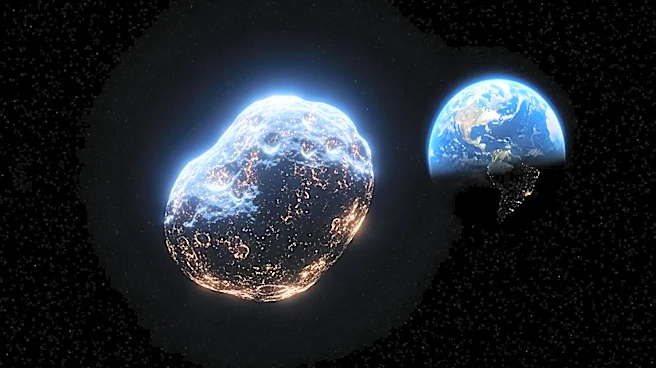
NASA is tracking a bus-sized asteroid, designated 2026 KC1, as it approaches Earth at a speed of 45,522 mph. The asteroid, approximately 27 feet across, will make its closest approach at a distance of 304,000 miles. This event is part of a series of asteroid flybys,
including other space rocks like 2026 KF and 2026 JE1, which are also passing near Earth. While these asteroids pose no immediate threat, they highlight the ongoing need for monitoring near-Earth objects to assess potential risks.
Why It's Important?
The tracking of asteroids like 2026 KC1 underscores the importance of space monitoring programs in identifying and mitigating potential threats from near-Earth objects. While small asteroids typically pose minimal risk, larger ones could cause significant damage if they were to impact Earth. NASA's efforts in tracking these objects are crucial for early warning and developing strategies to prevent potential collisions. This vigilance is vital for protecting both human life and infrastructure from the catastrophic effects of asteroid impacts.
What's Next?
NASA will continue to monitor near-Earth objects, using advanced technology to improve detection and tracking capabilities. Future missions may focus on developing methods to deflect or destroy potentially hazardous asteroids. Public awareness and international cooperation will be essential in addressing the challenges posed by space threats, ensuring that global preparedness measures are in place to respond to any potential impact scenarios.