
What's Happening?
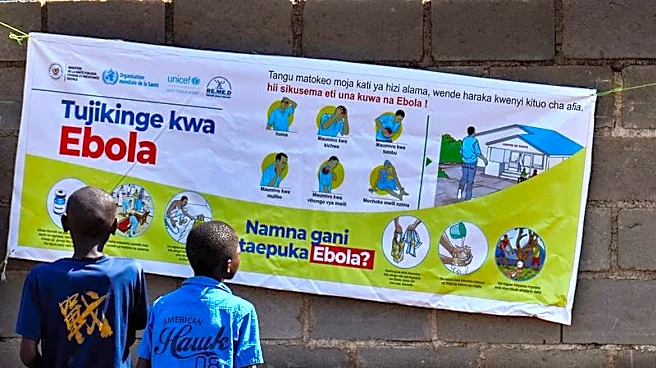
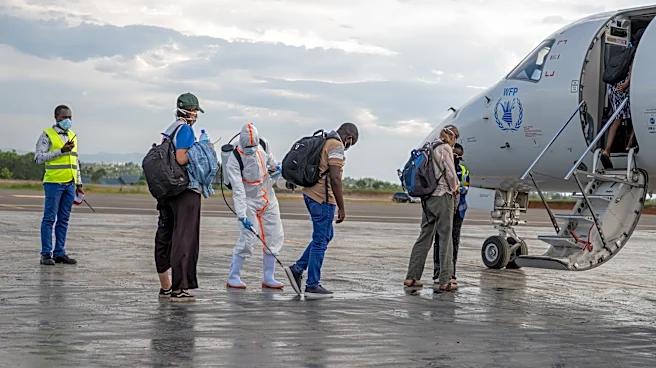
Uganda has closed its border with the Democratic Republic of Congo in response to an Ebola outbreak in the eastern Ituri province of Congo. This decision, aimed at preventing cross-border contagion, has led
to significant disruptions for traders who rely on the Mpondwe border post for commerce. The closure has resulted in long queues of trucks carrying perishable goods, such as plantains and fish, which are at risk of spoiling. Traders express frustration over the slow movement of cargo, despite understanding the health precautions. The World Health Organization has declared the outbreak a public health emergency of international concern, though it discourages border closures. The Ebola outbreak in Congo has seen over 1,000 suspected cases, with confirmed cases and deaths continuing to rise.
Why It's Important?
The border closure highlights the tension between public health measures and economic activity. For traders and local economies dependent on cross-border trade, the closure poses a significant financial threat, with perishable goods at risk of spoiling and businesses facing potential losses. The situation underscores the challenges of managing infectious disease outbreaks in regions with porous borders and strong economic ties. The decision to close the border reflects the urgency of containing the Ebola outbreak, but it also raises questions about the balance between health security and economic stability. The impact on traders and local communities could have long-term economic repercussions, affecting livelihoods and regional trade dynamics.
What's Next?
Ugandan authorities are likely to continue monitoring the Ebola situation closely, with potential for further restrictions if the outbreak worsens. Efforts to manage the border closure's impact on trade may involve negotiations with Congolese authorities and international health organizations to find solutions that protect public health while minimizing economic disruption. Traders and businesses will need to adapt to the evolving situation, possibly seeking alternative routes or markets. The response to the outbreak will require coordination between health officials, governments, and the private sector to ensure effective containment and support for affected communities.