


What's Happening?
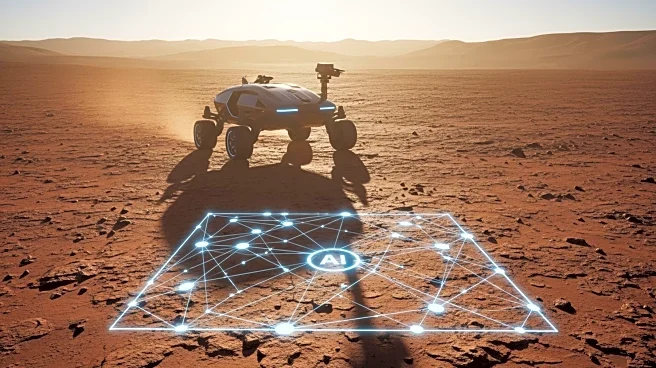
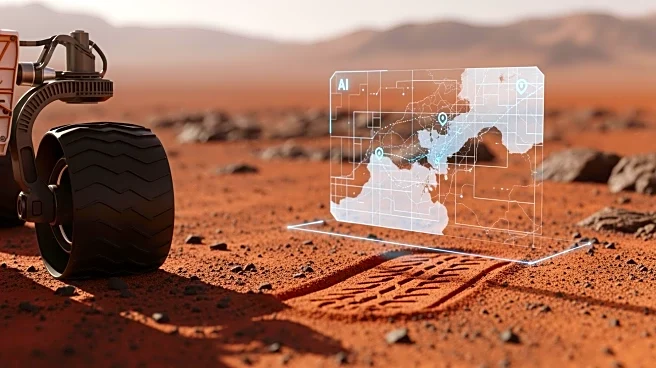
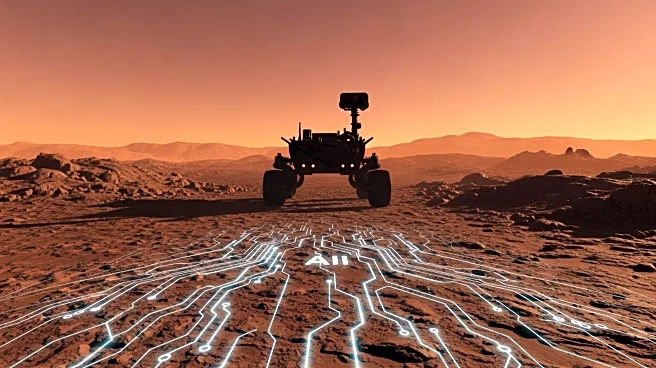
NASA's Perseverance rover has successfully completed the first AI-planned drives on Mars, marking a significant milestone in autonomous space exploration. The rover used a vision-capable generative AI system to map safe routes across the Martian surface,
a task traditionally handled by human planners. This demonstration, conducted by NASA's Jet Propulsion Laboratory, involved the AI analyzing high-resolution images and terrain data to identify waypoints and navigate challenging terrain. The AI-driven approach allows for more efficient and responsive exploration, enhancing the rover's ability to conduct scientific research on Mars.
Why It's Important?
The use of AI in planning rover routes represents a major advancement in space exploration technology. By enabling autonomous navigation, NASA can increase the efficiency and safety of missions, particularly as communication delays with Earth make real-time control challenging. This technology reduces the workload on human operators and allows for more extensive exploration of Mars' surface. The success of this AI-driven approach could pave the way for its application in future missions, including those involving human exploration of the Moon and Mars, ultimately supporting NASA's long-term goals of establishing a human presence on other planets.
What's Next?
Following this successful demonstration, NASA plans to continue refining the AI technology to enhance its capabilities for future missions. The agency will analyze the data collected during the AI-planned drives to improve the system's accuracy and reliability. As AI technology evolves, it may be integrated into other aspects of space exploration, such as data analysis and mission planning. NASA's ongoing research and development efforts will focus on expanding the use of AI to support more complex and ambitious missions, contributing to the broader goal of advancing human space exploration.