

What's Happening?
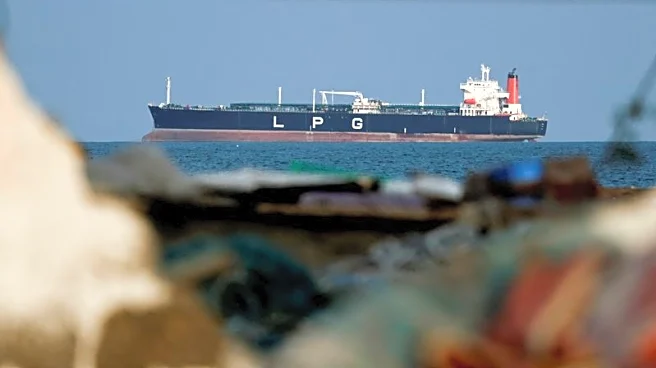
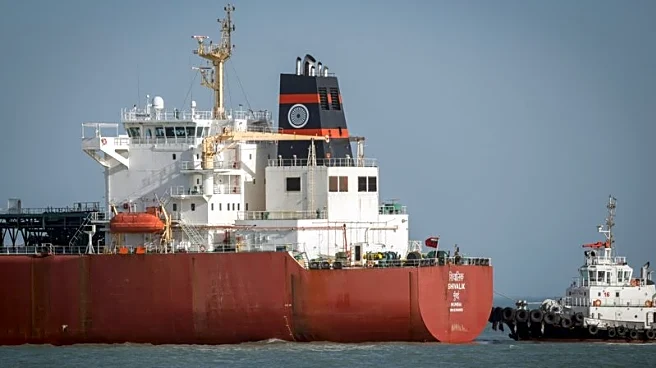
President Donald Trump is actively seeking assistance from international allies to secure the Strait of Hormuz, a critical maritime passage for global oil transportation. The U.S. aims to suppress Iranian anti-ship missiles and drones to ensure the safe
passage of oil tankers. Despite the U.S.'s capability to handle the situation independently, Trump has reached out to countries including France, South Korea, Japan, China, and the United Kingdom for support. The request comes amid concerns that Iran could disrupt oil flow through the strait, which is vital for global energy supplies. However, the response from these nations has been lukewarm, with some expressing reluctance to become involved in the conflict. Trump has criticized the UK for its lack of enthusiasm in supporting the U.S. efforts, highlighting the strategic importance of the strait for countries heavily reliant on its oil flow.
Why It's Important?
The Strait of Hormuz is a strategic chokepoint through which a significant portion of the world's oil supply is transported. Any disruption in this region could have severe implications for global energy markets, potentially leading to increased oil prices and economic instability. The U.S. is concerned about Iran's ability to threaten this vital passage, which could impact not only the U.S. but also major economies in Asia and Europe. By seeking international cooperation, the U.S. aims to share the burden of securing the strait and ensure uninterrupted oil flow. The reluctance of key allies to participate could strain diplomatic relations and challenge the effectiveness of collective security efforts in the region.
What's Next?
The U.S. is likely to continue diplomatic efforts to garner support from international partners. If allies remain hesitant, the U.S. may need to reassess its strategy and potentially increase its military presence in the region to ensure the security of the strait. The situation could also prompt discussions within NATO and other international forums about the responsibilities of member states in addressing global security threats. The outcome of these efforts will be crucial in determining the stability of oil markets and the geopolitical landscape in the Middle East.