



What's Happening?
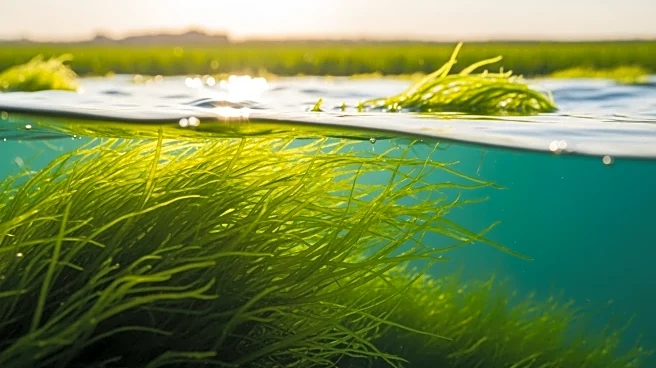
Fremantle Seaweed is developing a commercial-scale seaweed production hub in Western Australia's North West, focusing on asparagopsis seaweed, which can reduce methane emissions from cattle by up to 80%. Supported by $4 million from the State Government's
Investment Attraction Fund and $2.3 million in seed funding, the company aims to transition from pilot operations to large-scale manufacturing. The seaweed inhibits methane-producing enzymes in cattle, offering a promising solution for the beef and dairy sectors. The company is also preparing a Wagyu feedlot trial to assess the supplement's impact on meat quality and productivity.
Why It's Important?
This initiative is significant as it addresses the agricultural sector's contribution to methane emissions, a potent greenhouse gas. By integrating asparagopsis into cattle feed, the industry can significantly reduce its environmental impact, aligning with global efforts to combat climate change. The project also represents a potential economic boon, creating a new industry around seaweed cultivation and providing farmers with practical, sustainable tools. The success of this initiative could set a precedent for similar projects worldwide, promoting sustainable agricultural practices.
What's Next?
Fremantle Seaweed plans to expand its operations, with the North West hub expected to meet over 20% of Australia's dairy and feedlot asparagopsis needs. The upcoming Wagyu feedlot trial will provide data on the supplement's effectiveness in real-world conditions, potentially encouraging widespread adoption. The company is also seeking additional investment to further scale its operations, aiming to cut nearly one million tonnes of carbon dioxide-equivalent emissions annually. Continued collaboration with farmers and investors will be crucial for the project's success.