







What's Happening?
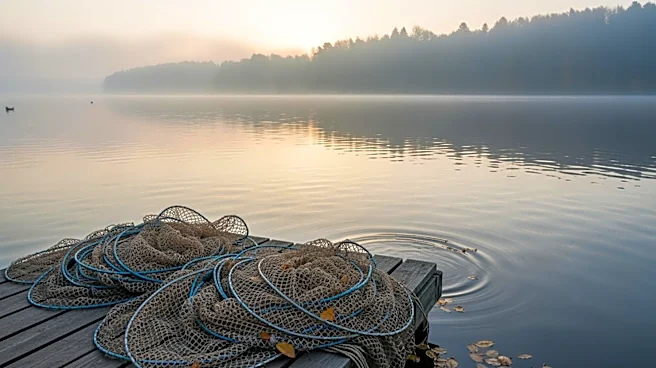
Arizona officials have indefinitely closed San Carlos Lake to visitors following a complete die-off of its fish population. The Arizona recreation and wildlife department announced that drought conditions and water released from a dam led to a 'major
fish kill,' affecting approximately 100% of the fish in the lake. The decomposing fish pose health hazards, prompting the closure to fishing, harvesting, and other activities until further notice. San Carlos Lake, located within the San Carlos Apache tribal lands and formed by the Coolidge Dam along the Gila River, is known for its diverse fish species and is a popular site for fishing. The lake closure has sparked reactions from the community, with some expressing sadness over the loss of a once-thriving fishing spot.
Why It's Important?
The closure of San Carlos Lake highlights the severe impact of ongoing drought conditions in the U.S., particularly in the western regions. This event underscores the broader environmental challenges faced by local ecosystems and communities dependent on these water bodies for recreation and livelihood. The fish die-off not only affects biodiversity but also has economic implications for the local tourism and fishing industries. Additionally, the situation raises concerns about water management and conservation efforts in drought-prone areas, emphasizing the need for sustainable practices to mitigate such environmental crises.
What's Next?
Officials will continue to monitor the conditions at San Carlos Lake and provide updates as they become available. The closure is expected to remain in place until the health hazards posed by the decomposing fish are resolved. In the meantime, local authorities and environmental groups may need to explore long-term strategies to address the root causes of the drought and prevent similar incidents in the future. This could involve collaborative efforts to improve water management and conservation practices across the region.