






What's Happening?
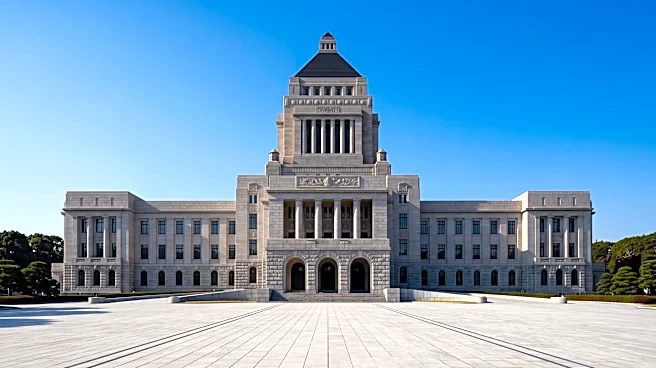
Japan's Cabinet has formally adopted a comprehensive counterterrorism action plan to address chemical, biological, radiological, nuclear, and explosive (CBRNE) threats. This plan includes the creation of a new expert advisory panel and a cross-ministry
intelligence body specifically tasked with tracking drones and artificial intelligence tools that could be weaponized. The expert panel, composed of medical doctors, academics, and former anti-terrorism officers, will advise a prime-minister-headed antiterrorism headquarters during an attack. The intelligence body will focus on collecting and analyzing information on potential drone and AI threats. However, both new entities are advisory and analytical, lacking the authority or capability to physically detect, track, or intercept weaponized drones over urban areas. This structural gap highlights a significant challenge in Japan's counterterrorism posture, as officials acknowledge the evolving threat model where commercially available drones can deliver dangerous payloads without requiring the attacker's physical presence.
Why It's Important?
This action plan represents Japan's most significant restructuring of its domestic counterterrorism architecture in recent years, driven by a recognition that the threat environment has fundamentally shifted since the 1995 Tokyo subway sarin attack. While the plan addresses critical intelligence and medical infrastructure gaps, the absence of operational interdiction capabilities for weaponized drones leaves a crucial vulnerability. The ability of commercial drones to deliver CBRNE agents from a standoff distance poses a fundamentally different challenge than the previous threat model of physically present attackers. This gap is not unique to Japan, as documented by the National Tactical Officers Association in the U.S., which notes that current civilian law enforcement tools are inadequate for rapid detection and interception of small commercial UAS in urban environments. The plan's effectiveness will depend on how well its advisory and analytical outputs integrate with operational agencies like the Self-Defense Forces and National Police Agency, which currently possess military-grade counter-drone technologies but are not directly linked to the civilian counterterrorism apparatus.
What's Next?
The immediate next steps involve establishing the expert advisory panel and developing collection and analytical frameworks for the drone and AI tracking body. The practical impact of these new structures will hinge on their ability to effectively inform and coordinate with operational agencies responsible for executing a response. Japan's Self-Defense Forces are already trialing vehicle-mounted laser systems for counter-drone operations and have conducted joint counter-drone training with the U.S., but these capabilities are primarily in the military domain. A key challenge will be to bridge the institutional gap between military counter-drone capabilities and civilian counterterrorism needs, particularly for urban CBRNE scenarios. The ongoing public discourse and policy development will likely focus on how to develop and integrate operational counter-drone layers within the civilian counterterrorism framework to address the acknowledged threat of weaponized drones.
Beyond the Headlines
The adoption of this plan underscores a broader global trend where emerging technologies, particularly drones and artificial intelligence, are reshaping national security paradigms. The shift from 'old space to new space,' with the proliferation of commercial satellite launches, further complicates counter-drone security as larger drones increasingly rely on satellite links. This necessitates a holistic security approach that considers not just the aircraft but also ground control stations, communication links, and software supply chains as potential vulnerabilities. The plan also highlights the tension between operational speed and legal processes, as rapid decision-making is often required in counter-drone operations, contrasting with the deliberate speed of traditional legal authorizations. Ultimately, Japan's experience reflects a global struggle to build robust governance, interoperability, and trust in a rapidly evolving technological landscape that has outpaced existing regulatory frameworks.