



What's Happening?
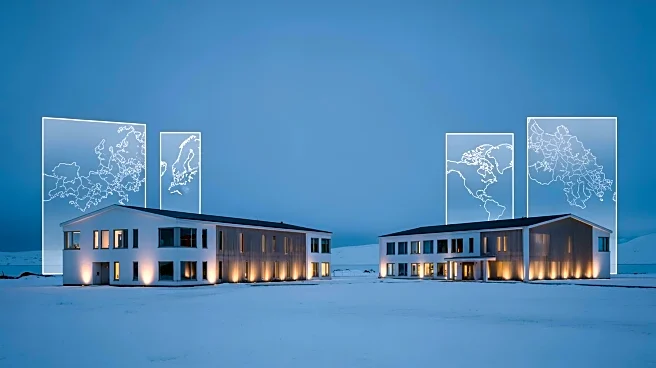
Canada and France have announced the opening of diplomatic consulates in Nuuk, the capital of Greenland, as a show of support for Denmark and the Arctic island. This move comes in response to recent U.S. efforts to exert control over Greenland, a semiautonomous
territory of Denmark. Canadian Foreign Minister Anita Anand, accompanied by Canada's Indigenous governor general, Mary Simon, is set to inaugurate the Canadian consulate. The consulate aims to enhance cooperation on climate change and Inuit rights. Meanwhile, France's Foreign Ministry has appointed Jean-Noël Poirier as consul general, marking the first European Union country to establish a consulate general in Greenland. The French consulate will focus on deepening cultural, scientific, and economic cooperation with Greenland. This diplomatic expansion follows U.S. President Donald Trump's earlier threats to impose tariffs on Denmark and other European countries opposing his takeover ambitions, which were later retracted after a framework agreement was reached with NATO.
Why It's Important?
The establishment of Canadian and French consulates in Greenland underscores the geopolitical significance of the Arctic region. As climate change opens new shipping routes and access to mineral resources, international interest in Greenland has intensified. The U.S. has shown a keen interest in Greenland's strategic location and resources, leading to diplomatic tensions. By opening consulates, Canada and France are reinforcing their commitment to Arctic stability and cooperation, countering U.S. influence. This development could impact U.S. foreign policy and its relations with NATO allies, as it highlights the importance of multilateral cooperation in the Arctic. The move also emphasizes the need for sustainable development and respect for indigenous rights in the region.
What's Next?
The opening of these consulates is likely to lead to increased diplomatic activity in Greenland, with potential collaborations in scientific research, environmental protection, and cultural exchanges. The U.S., Denmark, and Greenland are expected to continue technical talks to finalize an Arctic security deal, which could shape future geopolitical dynamics in the region. Stakeholders, including indigenous communities and environmental groups, will likely monitor these developments closely to ensure that economic interests do not overshadow environmental and cultural considerations.