




What's Happening?
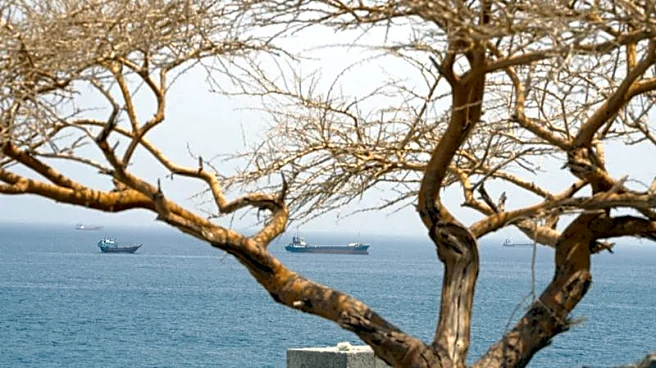
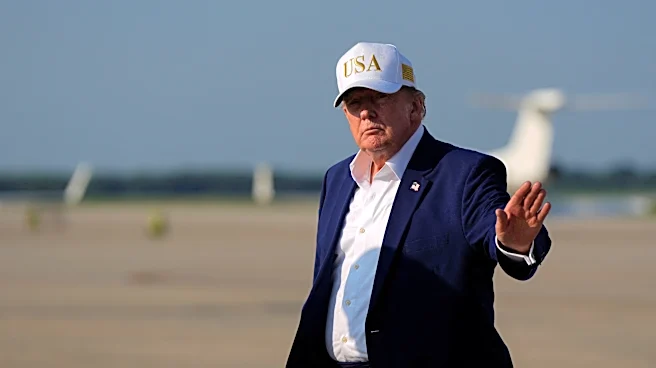
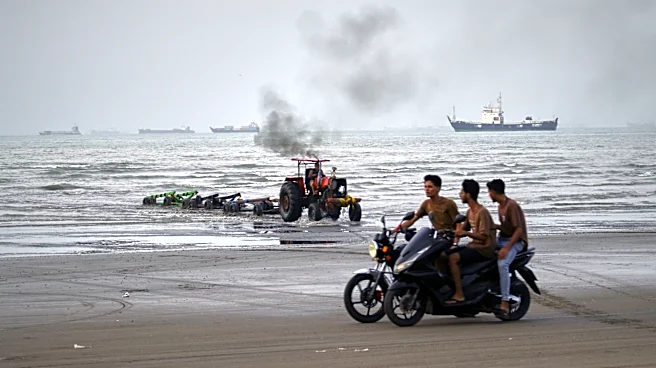
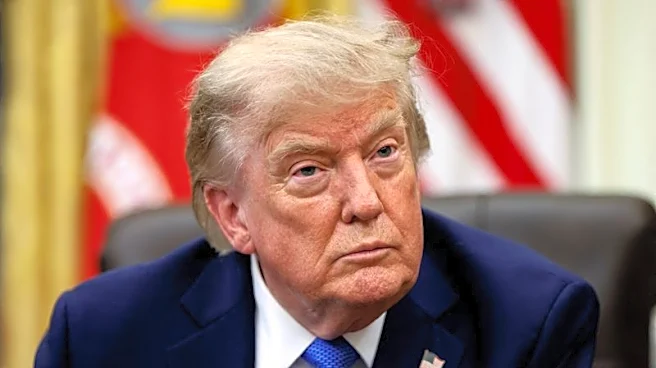
President Trump has reiterated claims that the United States maintains 'total control' over the Strait of Hormuz, despite a significant drop in vessel transit due to the ongoing US-Israel conflict with Iran. In a Truth Social post, Trump emphasized the U.S.
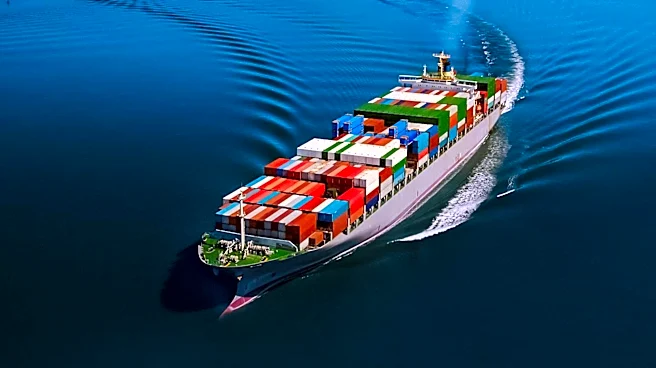
blockade of Iranian ports, describing it as a 'WALL OF STEEL.' The conflict has led to a dramatic decrease in the number of ships crossing the strait, with only eight vessels transiting on a recent day compared to the pre-war average of 130 to 140. Diplomatic efforts to resolve the conflict and reopen the strait have stalled, with Iran demanding the lifting of the U.S. naval blockade and sanctions.
Why It's Important?
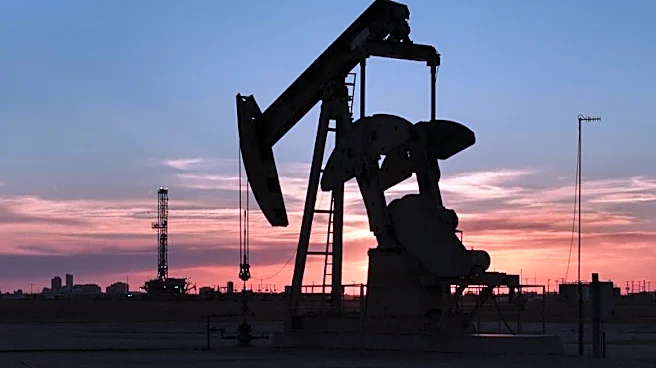
The Strait of Hormuz is a critical chokepoint for global oil transportation, and disruptions in its transit can have significant implications for international energy markets. The U.S. assertion of control over the strait highlights the strategic importance of the region and the potential for geopolitical tensions to impact global trade. The conflict and resulting blockade have strained U.S.-Iran relations and complicated diplomatic efforts to achieve peace. The situation underscores the challenges of balancing military actions with diplomatic negotiations in a volatile region.
What's Next?
As the conflict continues, the U.S. and its allies may face increasing pressure to find a diplomatic resolution that ensures the security of the Strait of Hormuz while addressing Iran's demands. The ongoing tensions could lead to further disruptions in oil transportation, affecting global energy prices and economic stability. The U.S. administration may need to navigate complex international dynamics to achieve a sustainable peace agreement and restore normalcy in the region.
Beyond the Headlines
The situation in the Strait of Hormuz reflects broader geopolitical shifts and the challenges of maintaining stability in a region marked by historical rivalries and strategic interests. The U.S. approach to the conflict may influence its relationships with other regional powers and impact its standing in international diplomacy. The conflict also raises questions about the effectiveness of military interventions in achieving long-term peace and security.