
What's Happening?
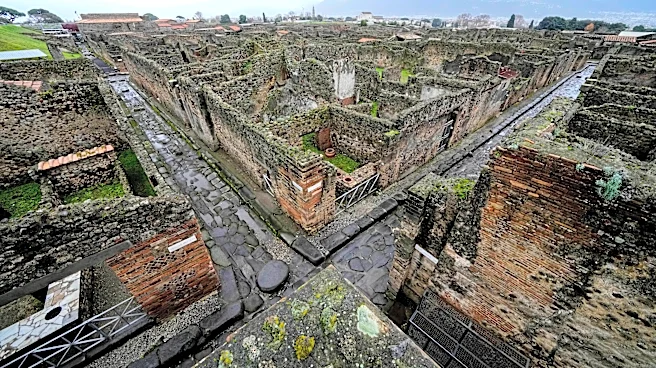
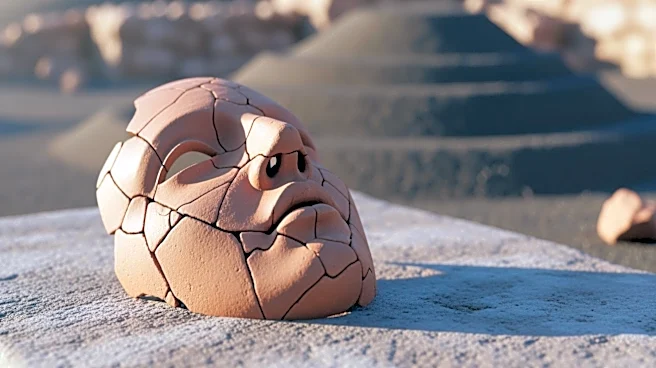
Archaeologists at Pompeii have utilized artificial intelligence to digitally reconstruct the face of a victim from the AD 79 eruption of Mount Vesuvius. This marks the first use of AI in such a context,
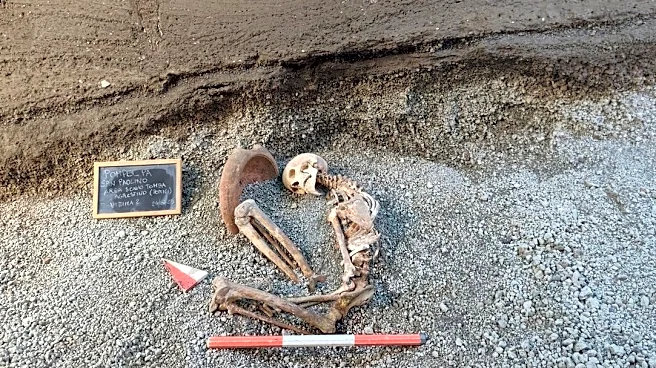
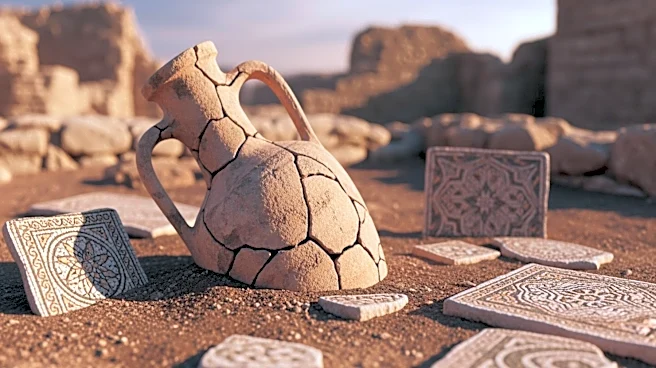
offering a new perspective on the historical event. The reconstruction depicts an older man who perished while attempting to flee the city. The project, a collaboration between the Pompeii Archaeological Park and the University of Padua, is based on data from excavations near the Porta Stabia necropolis. The victim was found with personal items, including a terracotta mortar, an oil lamp, and coins, providing insights into his final moments.
Why It's Important?
The use of AI in archaeology represents a significant advancement in the field, allowing for more detailed and accessible reconstructions of historical events. This technology can enhance public engagement by providing a more tangible connection to the past. The project also underscores the potential of AI to revolutionize classical studies, offering new methods for analyzing and interpreting archaeological data. By making research more accessible, it can foster a deeper understanding of historical events and their impact on human civilization.
Beyond the Headlines
The integration of AI in archaeology raises questions about the ethical implications of reconstructing human likenesses from historical remains. It also highlights the potential for AI to transform other fields of study, prompting discussions about the balance between technological innovation and the preservation of scientific integrity. As AI continues to evolve, its application in archaeology could lead to new discoveries and a reevaluation of historical narratives.