







What's Happening?
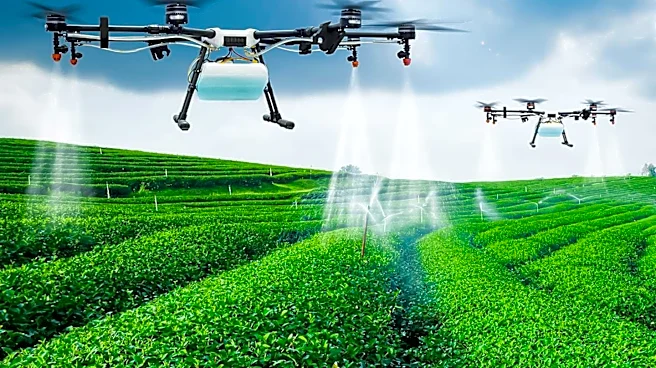
Greater Palm Springs, a highly productive winter farming region in the U.S., is increasingly adopting agricultural technology (agtech) to address challenges such as water scarcity, labor shortages, and rising production costs. The region, known for producing
95% of the country’s commercial dates and being a leader in early-season grapes, bell peppers, carrots, and leafy greens, is transitioning into a new era of farming. This shift involves integrating software, sensors, robotics, and data analytics into traditional agricultural practices. The extreme heat, limited water resources, and commercial-scale farming operations in Greater Palm Springs make it an ideal testing ground for developing and refining agtech solutions that can be applied to other arid regions and farms across the Southwest.
Why It's Important?
The adoption of agtech in Greater Palm Springs is crucial for the sustainability and continued productivity of its agricultural sector. As environmental and economic pressures intensify, leveraging technology becomes essential for maximizing efficiency in water usage, labor management, and overall crop yield. This integration ensures that the region can maintain its significant contribution to the national food supply, particularly for specialty crops like dates and early-season produce. Furthermore, the region's role as a 'real-world laboratory' for agtech innovation has broader implications, as successful solutions developed here can be scaled and implemented in other drought-prone or resource-constrained agricultural areas, enhancing food security and economic resilience across the U.S. The shift also creates new economic opportunities in the tech sector within agricultural communities.
What's Next?
The trend of integrating agtech into farming practices in Greater Palm Springs is expected to accelerate, with continued investment in smart irrigation systems, automated harvesting, and data-driven decision-making tools. This will likely lead to further advancements in precision agriculture, allowing farmers to optimize resource allocation and minimize waste. The success stories and innovations emerging from this region will serve as models for other agricultural areas facing similar challenges, potentially driving policy changes and increased funding for agtech research and development. The collaboration between traditional farming expertise and technological innovation will continue to evolve, shaping a more resilient and efficient agricultural future for the U.S. Southwest and beyond.
Beyond the Headlines
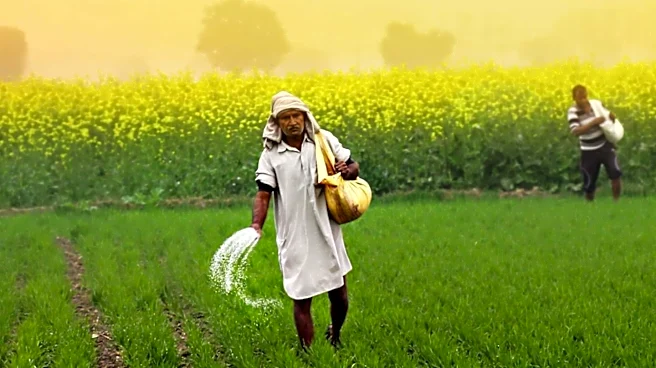
The technological transformation in Greater Palm Springs agriculture has deeper implications for the future of farming and rural communities. The increasing reliance on automation and data could alter the traditional labor landscape, potentially leading to a demand for new skills in technology operation and maintenance, while reducing the need for manual labor. This shift raises questions about workforce retraining and the socio-economic impact on agricultural workers. Moreover, the development of region-specific agtech solutions highlights the importance of localized innovation in addressing global challenges like climate change and food security. It also underscores the evolving definition of a 'farm,' where digital infrastructure and data management are becoming as critical as physical land and machinery, prompting discussions about data ownership and access in the agricultural sector.