





What's Happening?
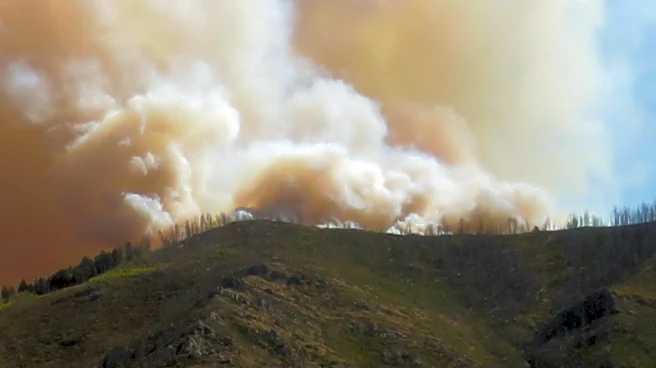
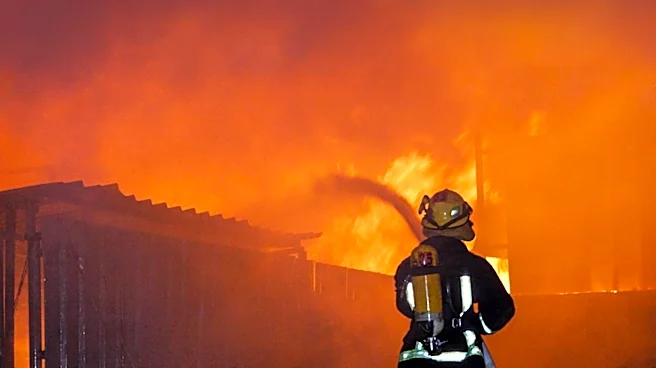
An accidental fire in Horseshoe Bend, Boise County, Idaho, prompted a rapid response from multiple agencies on Sunday. The Horseshoe Bend Fire Department reported that strong cooperation between these agencies prevented the incident from escalating significantly.
The blaze ultimately affected only undeveloped land. Earlier in the day, the Boise County Sheriff's office issued evacuations for residents in the area near Robbs Creek, which were subsequently lifted a few hours later. Officials with the U.S. Wildland Fire Service (USWFS) estimated the fire to be approximately one acre in size and deployed one overhead unit, one dozer, and two engines to assist in the response efforts. Despite recent cooler temperatures and wetter weather, the fire department emphasized that fire danger remains high in the region.
Why It's Important?
This incident highlights the ongoing risk of wildfires in Idaho, even with recent favorable weather conditions. The quick and coordinated response from multiple agencies, including the Horseshoe Bend Fire Department and the U.S. Wildland Fire Service, was crucial in containing the fire and preventing it from spreading to populated areas or causing more extensive damage. The temporary evacuations underscore the immediate threat such fires pose to residents and their property, emphasizing the importance of preparedness and rapid emergency response. The event serves as a reminder to the public and local authorities about the persistent fire danger and the need for continued vigilance and resource allocation to mitigate wildfire risks in the state.
What's Next?
Following the containment of the fire, authorities will likely conduct an investigation into the exact cause of the accidental blaze. The Horseshoe Bend Fire Department and other responding agencies will continue to monitor fire conditions in the area, especially given their warning that fire danger remains high despite recent weather. Public awareness campaigns regarding fire safety and prevention may be reinforced. Local residents who were temporarily evacuated will return to their homes, and the focus will shift to assessing any minor environmental impacts on the undeveloped land. Emergency services will remain on alert for future fire incidents, particularly as seasonal conditions can fluctuate rapidly.
Beyond the Headlines
The successful containment of this fire underscores the critical role of inter-agency cooperation and resource sharing in managing natural disasters. It also brings to light the broader challenge of wildfire management in the Western U.S., where accidental fires can quickly become major threats due to dry conditions and expansive undeveloped lands. The incident serves as a microcosm of the larger efforts required to protect communities and natural resources from the increasing frequency and intensity of wildfires. It also implicitly raises questions about land use planning and the balance between development and preserving natural landscapes in fire-prone regions, as well as the long-term impacts of climate patterns on fire seasons.