








What's Happening?
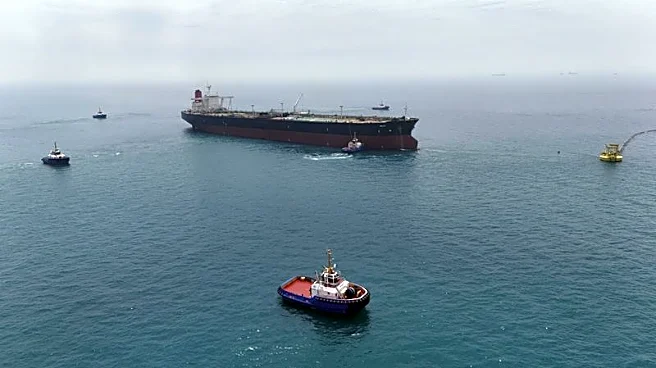
Brent oil prices have fallen below $75 for the first time since the onset of the Iran war, as tanker traffic through the Strait of Hormuz increases. This development comes as the U.S. and Iran signal progress in peace talks aimed at ending the conflict
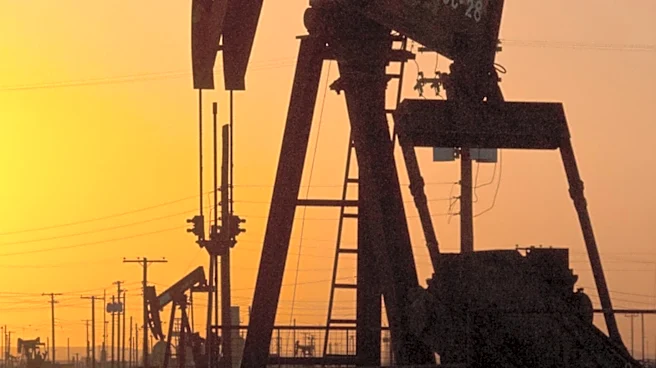
that began in late February. The International Maritime Organization has received safety guarantees, allowing hundreds of ships to exit the Persian Gulf. The International Energy Agency reports that the United Arab Emirates is exporting oil at nearly 85% of pre-war levels. Despite the price drop, the American Petroleum Institute noted a decrease in crude inventories at Cushing, Oklahoma, indicating potential market tightness.
Why It's Important?
The decline in oil prices reflects a significant shift in the global oil market, influenced by geopolitical developments. The increased traffic through Hormuz suggests a reduction in regional tensions, which could stabilize global oil supply chains. This price drop may benefit consumers through lower fuel costs, although the U.S. market shows signs of tightness. The situation also highlights the complex interplay between geopolitical negotiations and economic outcomes, with potential implications for energy policy and international relations.
What's Next?
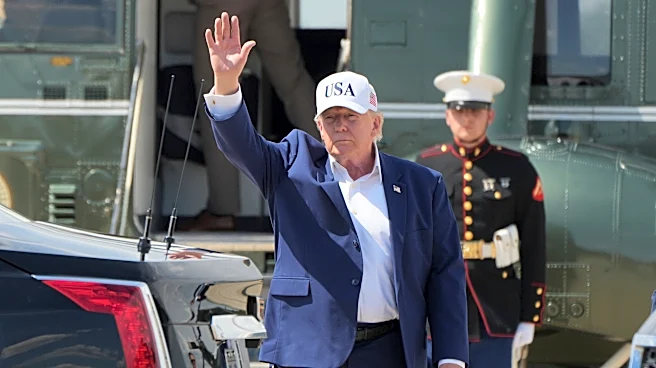
The ongoing U.S.-Iran peace talks could lead to further stabilization in the region, potentially impacting global oil markets. The U.S. Senate's symbolic vote to end the war with Iran indicates domestic political pressures that may influence future diplomatic strategies. Additionally, President Trump's directive to investigate gasoline prices suggests potential regulatory actions to address consumer concerns. The outcome of these developments will be closely watched by industry stakeholders and policymakers.