



What's Happening?
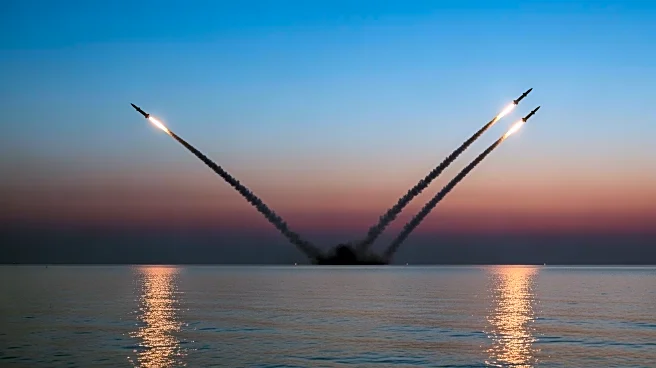
North Korea has launched multiple ballistic missiles into the sea, as reported by South Korea's military. The missiles were fired from North Korea's capital region around 7:50 a.m. local time, targeting the eastern waters. This missile activity comes
ahead of North Korea's ruling party congress, which is anticipated to showcase the country's defense achievements. South Korea's Joint Chiefs of Staff have increased their surveillance and are coordinating closely with the United States and Japan. Japan's defense ministry also confirmed the detection of suspected missile launches. The timing of the launch coincides with South Korean President Lee Jae Myung's planned visit to China, where discussions on promoting peace on the Korean Peninsula are expected.
Why It's Important?
The missile launches by North Korea are significant as they highlight the ongoing tensions on the Korean Peninsula and the potential for increased military provocations. This development could impact regional security dynamics, particularly involving South Korea, Japan, and the United States. The launches may be a strategic move by North Korea to assert its military capabilities ahead of its Workers' Party congress, potentially influencing its diplomatic stance towards the U.S. and other nations. The situation underscores the fragile nature of peace efforts in the region and the challenges faced by international stakeholders in addressing North Korea's military ambitions.
What's Next?
The upcoming Workers' Party congress in North Korea is a critical event to watch, as it may set new policies regarding the U.S. and international relations. South Korea's President Lee Jae Myung's visit to China could also play a pivotal role in shaping diplomatic efforts to ease tensions. The international community, particularly the U.S., Japan, and South Korea, will likely continue to monitor North Korea's actions closely and may seek to engage in diplomatic talks to prevent further escalation. The response from China, as a key regional player, will be crucial in determining the next steps in addressing the security challenges posed by North Korea.