





What's Happening?
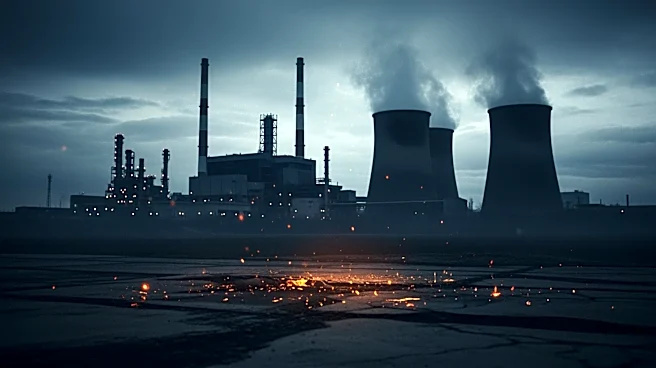
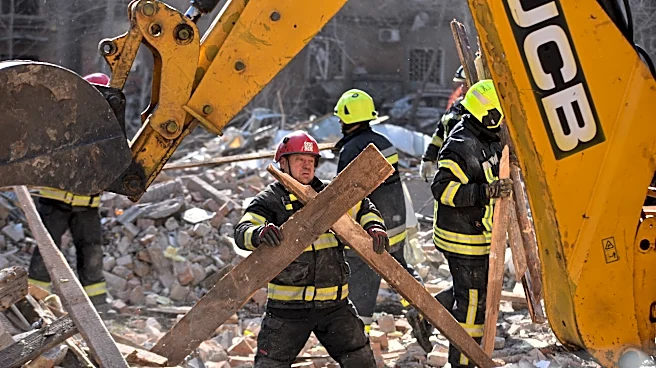
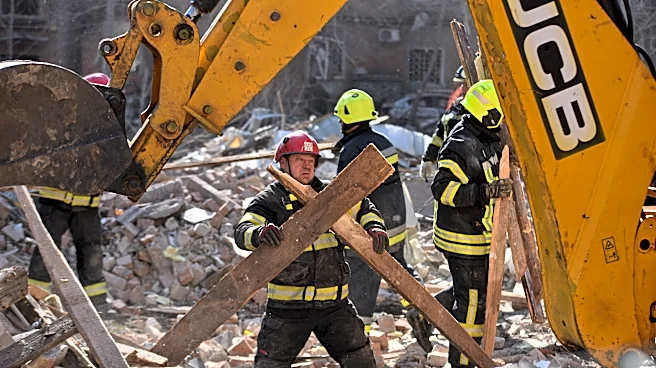
On the 40th anniversary of the Chernobyl nuclear disaster, strikes across Ukraine and Russian-occupied territories resulted in at least 16 fatalities. The attacks included Russian drone and missile strikes on Dnipro, which killed nine people, and Ukrainian
drone strikes on Sevastopol in Crimea and a village in Luhansk, resulting in additional casualties. Ukraine has developed long-range drones capable of reaching deep into Russian territory, recently targeting oil facilities. Ukrainian President Volodymyr Zelenskyy warned of the risks of Russian attacks near Chernobyl, highlighting the potential for a man-made disaster. The International Atomic Energy Agency (IAEA) has called for immediate repairs to the plant's protective shell, damaged in a previous strike.
Why It's Important?
The ongoing conflict between Ukraine and Russia continues to pose significant risks, particularly concerning nuclear safety at Chernobyl. The strikes underscore the potential for escalation and the broader implications for regional stability. The use of drones by Ukraine to target Russian infrastructure highlights the evolving nature of warfare and the strategic importance of technological advancements. The situation also raises concerns about nuclear terrorism and the need for international intervention to prevent further escalation. The conflict's impact on global energy markets is notable, as disruptions in oil supply could have far-reaching economic consequences.
What's Next?
The international community may increase pressure on Russia to cease attacks near Chernobyl to prevent a nuclear disaster. The IAEA's call for repairs at the plant could lead to international funding and support for safety measures. The conflict's continuation suggests further military engagements, with potential responses from global powers to address the humanitarian and environmental risks. Diplomatic efforts may intensify to de-escalate tensions and find a resolution to the conflict.
Beyond the Headlines
The conflict's impact extends beyond immediate military engagements, affecting global energy markets and raising ethical concerns about the use of drones in warfare. The potential for nuclear incidents at Chernobyl highlights the long-term environmental and health risks associated with the conflict. The situation also underscores the challenges of international diplomacy in addressing complex geopolitical issues and the need for coordinated global responses to prevent further escalation.