






What's Happening?
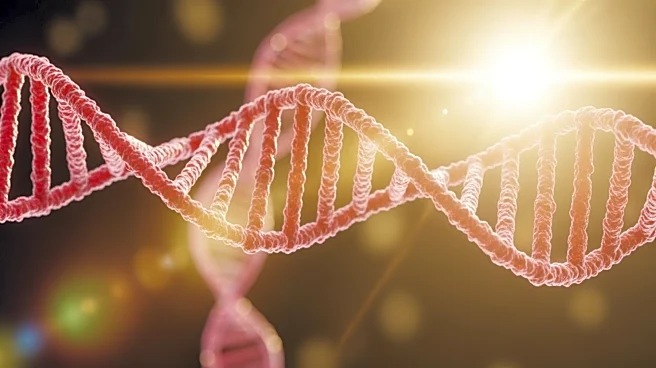
Recent research conducted by the University of Copenhagen and Nanyang Technological University has revealed that RNA damage, rather than DNA damage, is the primary cause of sunburn. This finding challenges the long-held belief that DNA damage is responsible
for the inflammation and cell death associated with sunburn. The study, involving both mice and human skin cells, demonstrated that RNA damage triggers a response in ribosomes, managed by a protein called ZAK-alpha, which leads to the 'ribotoxic stress response.' This response is crucial in initiating cell death and inflammation following UV exposure. The research suggests that RNA damage prompts a quicker and more efficient protective response in the skin, marking a significant shift in understanding how skin reacts to UV radiation.
Why It's Important?
This discovery has significant implications for the prevention and treatment of sunburn and other inflammatory skin conditions. By understanding that RNA damage, rather than DNA, initiates the skin's response to UV radiation, new strategies can be developed to protect against and treat sun-related skin damage. This could lead to innovative treatments for chronic skin conditions exacerbated by sun exposure. The findings also necessitate a revision of current scientific understanding and educational materials regarding sunburn, potentially influencing future research directions in dermatology and skin cancer prevention.
What's Next?
The study's authors suggest that the new understanding of RNA's role in sunburn could lead to the development of novel therapeutic approaches targeting the ribotoxic stress response. This could involve creating treatments that enhance the skin's natural protective mechanisms against UV damage. Additionally, the research community may focus on further exploring the molecular pathways involved in RNA damage and its broader implications for skin health. As textbooks and educational resources are updated to reflect these findings, there may be increased interest in studying RNA's role in other cellular stress responses.
Beyond the Headlines
The paradigm shift from DNA to RNA as the primary trigger for sunburn responses highlights the complexity of cellular processes and the need for continuous research to uncover the intricacies of biological systems. This discovery underscores the importance of revisiting established scientific beliefs and remaining open to new evidence that can reshape understanding. It also raises questions about the potential roles of RNA in other types of cellular damage and stress responses, which could have far-reaching implications beyond dermatology.