



What's Happening?
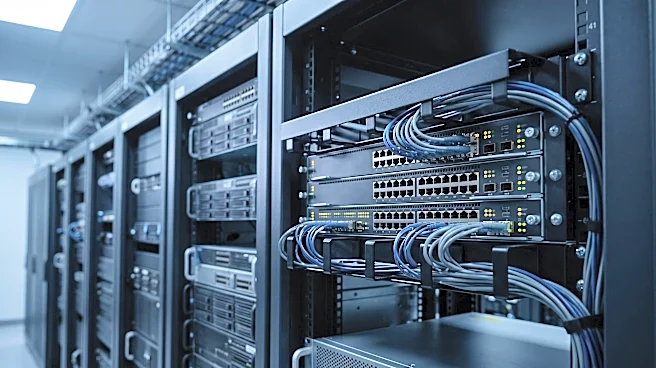
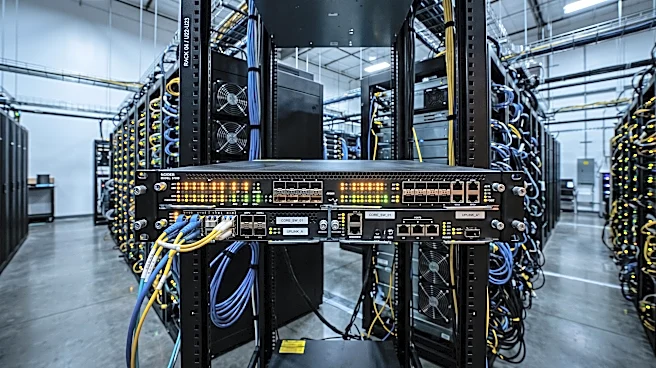
The Federal Aviation Administration (FAA) has paused the installation of new Juniper routers and deactivated those already deployed, following a national ground stop last week. The disruption was traced to a newly installed router in El Dorado, Arkansas,
which caused intermittent communication and radar signal issues at 17 of the 22 regional air traffic control centers. The FAA reported that an 'excessive data' flood, with 1,000 connection attempts every 4 to 5 seconds, overwhelmed the 25-year-old routers in the network, leading to instability in aircraft communications and radar feeds. Currently, the FAA is relying on older Cisco routers while the problematic Juniper routers are being tested by L3Harris, the company responsible for their installation. Democrats in the Senate have called for a halt to the router replacement program until the root cause of the failure is identified and have requested answers from the Trump administration.
Why It's Important?
This incident highlights critical vulnerabilities in the nation's air traffic control infrastructure, underscoring the urgent need for modernization. The reliance on 25-year-old technology, as revealed by the FAA, poses significant risks to air travel safety and efficiency. The disruption caused by a single new router demonstrates the complex challenges involved in upgrading such a vast and interconnected system. The call for a $50.1 billion investment from the Trump administration, with $10.1 billion specifically for air traffic control updates, reflects the substantial financial commitment required to address these long-standing issues. The incident also brings into focus the political dimension of infrastructure projects, with Democrats demanding accountability and a thorough investigation, emphasizing the bipartisan concern over the stability of air travel systems.
What's Next?
The FAA will continue to investigate the root cause of the router failure, with the problematic devices undergoing testing at L3Harris's lab. The agency will rely on its older Cisco routers for continued operation while the investigation proceeds. Congressional scrutiny is expected to intensify, with lawmakers demanding detailed explanations and a clear plan to prevent future disruptions. The Trump administration's request for over $50 billion for system modernization and airport improvements will likely be a central point of discussion in Congress. This funding is intended to update the air traffic control system, boost airport infrastructure, replace or refurbish terminals, construct new traffic control centers, and upgrade FAA-owned air traffic control towers. The outcome of these discussions will determine the pace and scope of future modernization efforts.
Beyond the Headlines
The incident exposes a deeper systemic challenge within critical national infrastructure: the tension between maintaining legacy systems and implementing new technologies. The FAA's decades-long struggle to modernize its air traffic control system, predating the Trump administration, suggests that the problem is not merely technological but also organizational and political. The rapid deployment of new technology without adequate testing or understanding of its interaction with existing systems can lead to widespread failures, as seen with the national ground stop. This event could prompt a re-evaluation of procurement processes, testing protocols, and the overall strategy for modernizing essential public services. It also raises questions about the balance between cost-saving measures and ensuring the resilience and reliability of critical infrastructure, particularly in sectors with direct public safety implications.