





What's Happening?
Representative Mike Lawler has introduced the Home Accessibility Improvements Inclusion Act, a new bill aimed at updating the Department of Housing and Urban Development's (HUD) universal design options for housing. The legislation also seeks to train
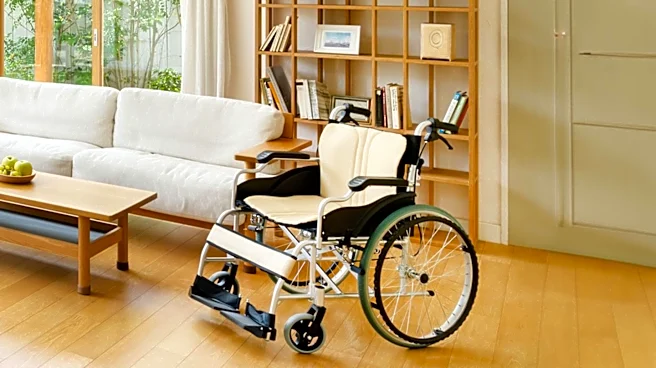
appraisers to properly value accessibility improvements financed through the Federal Housing Administration’s (FHA) 203(k) rehabilitation program. The proposed measure would encompass various home design features, including zero-step entrances, wider doorways and hallways, accessible bathrooms, lever-style handles, and reinforced walls for grab bars. According to Lawler, the primary goal of this bill is to enhance the safety and accessibility of homes for a diverse range of residents. This initiative reflects a broader effort to integrate universal design principles into housing infrastructure, ensuring that homes are functional and accommodating for individuals with varying needs.
Why It's Important?
This bill is important because it addresses a critical need for accessible housing in the United States, impacting a significant portion of the population, including the elderly, individuals with disabilities, and families with young children. By directing HUD to update universal design options, the legislation could standardize and promote features that allow people to age in place or live more independently. The provision for training appraisers to value accessibility improvements is particularly significant for the real estate and housing markets. Currently, such improvements may not always be adequately reflected in property valuations, which can disincentivize homeowners from making these necessary modifications. This bill could encourage more homeowners to invest in accessibility, potentially increasing the market value of their properties and expanding the inventory of accessible homes. This could also stimulate the construction and renovation industries, creating jobs and fostering innovation in accessible design. Ultimately, the legislation aims to improve the quality of life for many Americans by making homes safer and more inclusive.
What's Next?
The Home Accessibility Improvements Inclusion Act will now proceed through the legislative process in Congress. It will likely be assigned to relevant committees for review, debate, and potential amendments. Stakeholders, including disability advocacy groups, housing industry associations, and real estate professionals, are expected to engage with lawmakers to provide input and advocate for the bill's passage. If the bill successfully navigates through committee and receives a vote in both the House and Senate, it would then require presidential assent to become law. Should it be enacted, HUD would be tasked with developing and implementing new guidelines for universal design and establishing training programs for appraisers. The FHA would also need to integrate these new valuation standards into its 203(k) rehabilitation program. The timeline for these developments will depend on the legislative schedule and the level of bipartisan support the bill garners.
Beyond the Headlines
Beyond its immediate impact on housing accessibility, this bill touches upon broader societal implications related to inclusivity and economic equity. The emphasis on universal design reflects a growing recognition that environments should be designed to be usable by all people, to the greatest extent possible, without the need for adaptation or specialized design. This shift in perspective can lead to more equitable communities where individuals of all abilities can participate fully. Economically, by ensuring that accessibility improvements are properly valued, the bill could help close the appraisal gap that often penalizes homeowners for making these essential modifications. This could empower more individuals to invest in their homes, fostering greater financial stability and independence. Furthermore, the legislation could set a precedent for future policy-making, encouraging other sectors to adopt universal design principles and promoting a more inclusive approach to infrastructure development across the nation.