






What's Happening?
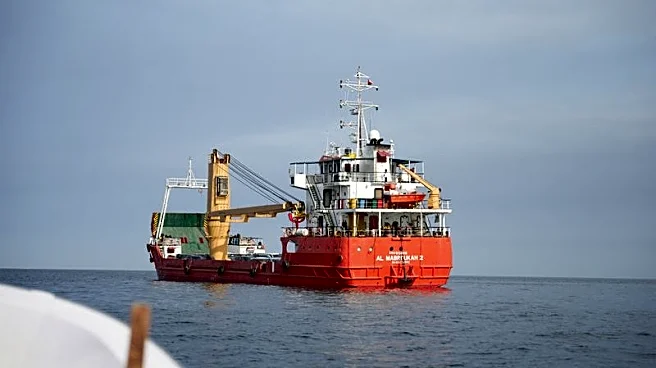
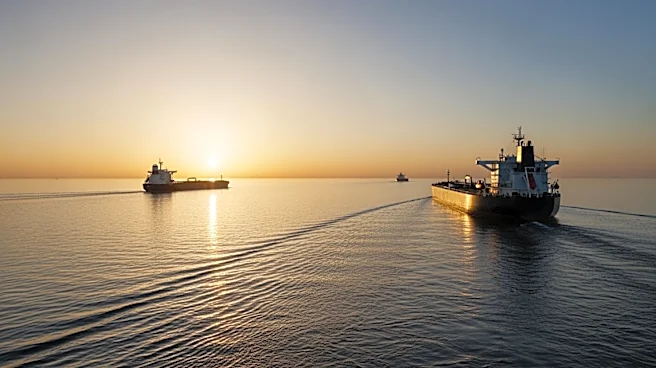
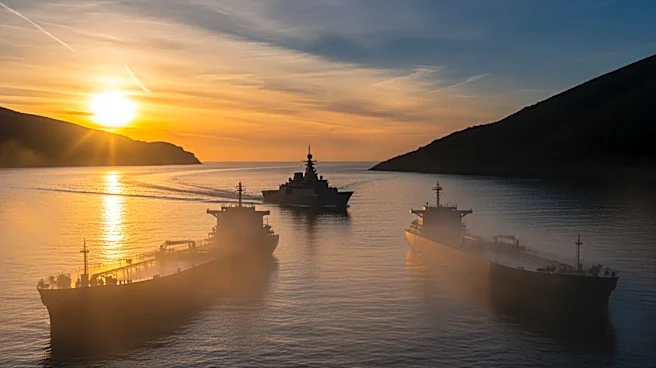
Chinese state-owned oil tankers have navigated the Strait of Hormuz for the first time since the U.S.-Israeli conflict with Iran began over six weeks ago. This passage occurred under a new 'tollbooth' system implemented by Iran, allowing vetted commercial
ships to transit the strait after a screening process. The Strait of Hormuz is a critical energy route, with about a quarter of the world's seaborne oil trade passing through it during peacetime. The recent conflict has highlighted Iran's control over this strategic chokepoint, despite its military being weakened by U.S. and Israeli attacks. In response to these developments, President Trump has threatened a naval blockade to halt trade with Iran, including oil exports, which are vital to Iran's economy. This announcement has caused a significant reduction in ship traffic, which had averaged 138 vessels per day before the conflict.
Why It's Important?
The passage of Chinese tankers through the Strait of Hormuz and President Trump's subsequent threat of a naval blockade have significant implications for global oil markets and geopolitical stability. The strait is a vital artery for global oil supply, and any disruption could lead to increased oil prices and economic instability. China's reliance on the strait for about 40% of its oil imports makes it particularly vulnerable to prolonged disruptions. The situation underscores the strategic importance of the strait and the potential for international conflict over control of this critical passage. Additionally, the U.S.'s aggressive stance could further strain relations with China and Iran, complicating diplomatic efforts to resolve the conflict.
What's Next?
The future of the Strait of Hormuz remains uncertain as diplomatic efforts continue. China, heavily reliant on the strait for oil imports, has a vested interest in stabilizing the region and has been involved in diplomatic initiatives to reopen the strait. However, recent negotiations between the U.S. and Iran have stalled, with both sides unable to reach a consensus. The U.S. Vice President has indicated that the impasse is more detrimental to Iran than to the U.S., while Iranian officials cite sweeping U.S. demands and a lack of trust as barriers to progress. The international community will be closely watching for any developments that could lead to a resolution or further escalation.
Beyond the Headlines
The situation in the Strait of Hormuz highlights broader geopolitical tensions and the complexities of international diplomacy. The conflict underscores the delicate balance of power in the Middle East and the potential for regional disputes to have global economic repercussions. It also raises questions about the effectiveness of military threats as a tool of foreign policy and the role of major powers like China in mediating international conflicts. The outcome of this situation could set precedents for how similar conflicts are managed in the future, particularly in regions with critical natural resources.