



What's Happening?
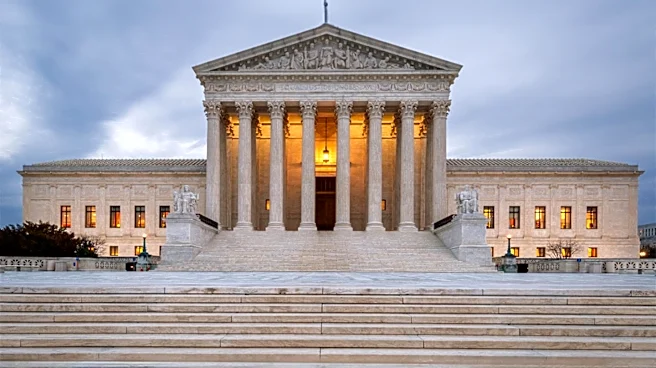
Recent landmark Supreme Court rulings, including *NYSRPA v. Bruen*, *Kennedy v. Bremerton*, and *Dobbs v. Jackson Women's Health Organization*, have introduced new constitutional tests that require courts to rely heavily on historical analysis. These
tests mandate that laws be consistent with the 'Nation's historical tradition' or 'historical practices and understandings.' However, legal scholars Joseph Blocher and Brandon Garrett from Duke Law argue that this approach forces judges, who are not trained historians, to 'play historian' in constitutional adjudication. Justice Sonia Sotomayor, in a 2024 concurring opinion, noted the confusion caused by applying *Bruen*. The Supreme Court has not provided clear guidance on how to conduct this historical fact-finding, including who should do it, how far back to look, or what constitutes a 'tradition.' This lack of clarity creates significant challenges for lower courts and litigants, leading to potential inconsistencies in legal outcomes.
Why It's Important?
The shift towards history-based constitutional tests has profound implications for the U.S. legal system. It places an unprecedented burden on courts to interpret complex historical records, a task for which they are often ill-equipped. This approach can lead to subjective interpretations of history, potentially resulting in inconsistent rulings across different courts and cases. The increased reliance on historical evidence, particularly in areas like gun control and abortion rights, can make legal standards more obscure and unpredictable, increasing costs for litigants and potentially undermining public confidence in the judiciary. Furthermore, it raises questions about the role of historical expertise in legal proceedings and whether judges should be expected to perform the functions of professional historians, potentially blurring the lines between legal interpretation and historical scholarship.
What's Next?
Blocher and Garrett propose several guidelines to address the challenges posed by these new historical tests. They suggest confining historical fact-finding to trial courts, supported by local rules, and requiring appellate courts to remand cases for further factual development rather than conducting historical research themselves. They also recommend employing professional historians as experts, similar to how scientific or technical experts are used, and involving juries in deciding whether historical facts satisfy legal standards. Without such guardrails, they argue, the history-based tests will fail to produce coherent, accurate, or fair rules. The ongoing application of these tests will likely continue to generate debate and legal challenges, potentially prompting the Supreme Court to issue further guidance or leading to legislative efforts to clarify the role of historical analysis in constitutional law.
Beyond the Headlines
The deeper implications of this judicial trend extend to the very nature of constitutional interpretation and the role of history in shaping modern law. The emphasis on 'originalism' and 'tradition' can be seen as an attempt to ground legal decisions in a fixed historical past, but it also raises questions about how a dynamic society can adapt its laws to contemporary challenges. This approach can lead to a selective reading of history, potentially overlooking marginalized voices or historical contexts that do not fit a predetermined narrative. The debate over 'playing historian' in courts highlights a fundamental tension between adhering to historical intent and ensuring that constitutional principles remain relevant and just in an evolving society. It also underscores the ethical responsibility of the judiciary to interpret the law fairly and consistently, even when faced with complex historical inquiries, and the need for robust methodologies to ensure historical accuracy in legal judgments.