






What's Happening?
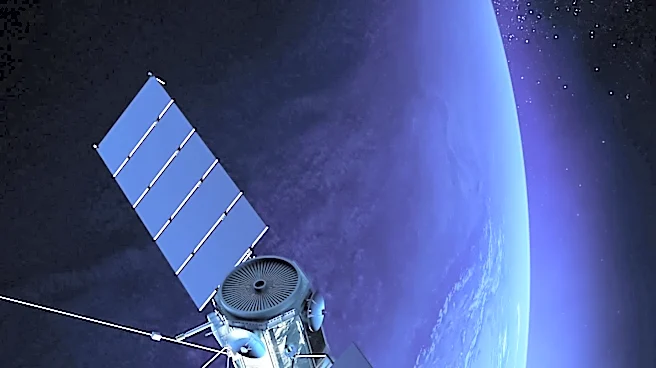
SpaceNews, in collaboration with Vantor, will host a virtual event on October 29 focusing on the application of artificial intelligence (AI) to the Geospatial Intelligence (GEOINT) mission. The event will explore how machine learning is transforming the collection,
processing, and exploitation of satellite imagery across defense, intelligence, and commercial markets. Speakers will discuss advancements in automated target recognition, change detection, multimodal data fusion, and large language models. The conversation will also address the challenges of validating AI outputs and maintaining analyst trust, as well as identifying where AI provides the greatest operational value and where human expertise remains indispensable. The event aims to provide insights into how intelligence organizations can adapt to persistent, data-driven surveillance, with speakers including Peter Wilczynski from Vantor, Joe O’Callaghan from the National Geospatial-Intelligence Agency (NGA), and Matt Maroofi from Shield AI.
Why It's Important?
This event is highly significant for U.S. national security, defense, and the burgeoning commercial space industry. The integration of AI into GEOINT missions is critical for processing the ever-increasing volume of Earth observation data, enabling faster and more accurate intelligence gathering. For the U.S. defense and intelligence communities, AI can enhance situational awareness, improve threat detection, and provide a strategic advantage in complex global environments. The discussion on validating AI outputs and maintaining analyst trust is crucial for ensuring the reliability and ethical deployment of these technologies in sensitive operations. For the commercial sector, advancements in AI-powered GEOINT can open new markets and applications, from environmental monitoring to urban planning. Companies like Vantor, which fuse data from imaging satellites and real-time sensor feeds to create AI-ready digital twins of Earth, stand to gain significantly from these developments, driving innovation and economic growth in the U.S. space and technology sectors.
What's Next?
The virtual event on October 29 will serve as a platform for experts to share insights and best practices regarding AI in GEOINT. Following the event, a recording will be made available, allowing a wider audience to access the discussions. The insights shared are expected to inform strategic decisions within U.S. defense and intelligence agencies regarding AI adoption and implementation. It could also foster collaborations between government entities, private companies, and research institutions to further develop and refine AI capabilities for GEOINT. The ongoing dialogue will likely focus on addressing the identified challenges, such as data validation and trust, to ensure the responsible and effective deployment of AI. This continuous evolution of AI in GEOINT will shape future intelligence operations and technological advancements in the U.S. and globally.
Beyond the Headlines
The application of AI to GEOINT raises profound ethical and societal questions beyond its operational benefits. The ability to conduct persistent, data-driven surveillance at an unprecedented scale brings concerns about privacy, civil liberties, and the potential for misuse of such powerful technologies. The discussion on where 'humans remain indispensable' highlights the critical role of human judgment, ethics, and oversight in an increasingly automated intelligence landscape. This underscores the need for robust ethical frameworks and policies to govern the development and deployment of AI in national security contexts. Furthermore, the rapid advancements in AI could exacerbate the digital divide, creating disparities in intelligence capabilities between nations and potentially leading to new forms of geopolitical competition. The event implicitly touches upon the future of warfare and intelligence gathering, where the line between human and machine decision-making becomes increasingly blurred, necessitating careful consideration of accountability and control.