
What's Happening?
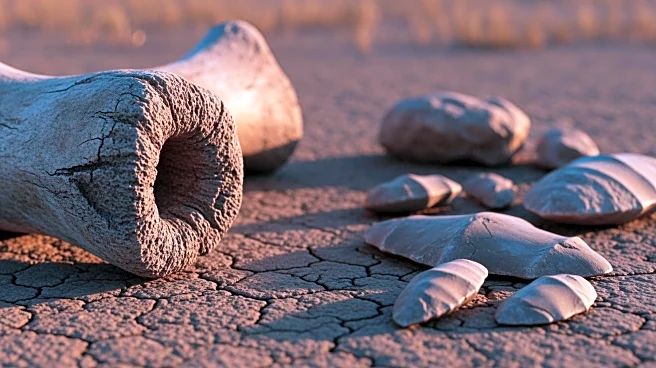
Researchers led by Manuel Domínguez-Rodrigo at Rice University have discovered evidence suggesting that early humans may have butchered elephants 1.8 million years ago. The discovery was made at Olduvai
Gorge in Tanzania, where a partial elephant skeleton was found alongside large stone tools. These tools, believed to be used by Homo erectus, indicate that early humans were capable of butchering large animals. The site, named EAK, shows that the bones were broken while still fresh, suggesting human intervention. However, some experts, like Michael Pante, remain skeptical, citing a lack of definitive cut marks on the bones.
Why It's Important?
This finding could significantly alter our understanding of early human behavior and diet. The ability to butcher large animals like elephants suggests advanced tool use and social cooperation among early humans. It also indicates a shift in dietary practices, potentially contributing to the development of larger brain sizes. The discovery challenges previous assumptions about the timeline of human evolution and the capabilities of early hominins. If confirmed, it would provide crucial insights into the social and cultural evolution of early human societies.