






What's Happening?
Governors from all six New England states have collectively appealed to congressional leaders for an additional $3 billion in federal funding for the Low-Income Home Energy Assistance Program (LIHEAP). This bipartisan request, outlined in a letter to House
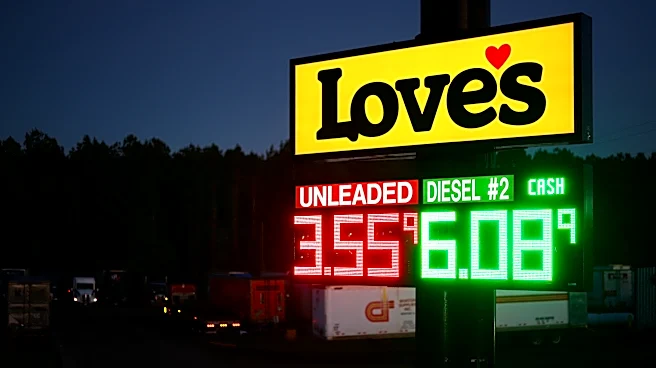
Committee on Appropriations Chair Tom Cole and Senate Committee on Appropriations Chair Susan Collins, aims to bring the total LIHEAP funding to $7 billion. The governors, including Connecticut Gov. Ned Lamont, Massachusetts Gov. Maura Healey, Rhode Island Gov. Dan McKee, Maine Gov. Janet Mills, New Hampshire Gov. Kelly Ayotte, and Vermont Gov. Phil Scott, emphasize the urgent need for this funding due to projected 50% increases in heating oil prices this winter. They highlight that low-income households in the Northeast could face an additional $1.1 billion in heating oil costs, and current funding levels are insufficient to meet the demand, potentially forcing states to reduce benefits or serve fewer eligible households.
Why It's Important?
This request underscores a critical issue facing vulnerable households across the U.S., particularly in the Northeast, where reliance on heating oil is high. The projected surge in heating oil prices, as cited by the National Energy Assistance Directors Association, threatens to exacerbate financial strain on low-income families already struggling with tight budgets. If the additional funding is not secured, states may be forced to cut essential heating assistance, leaving many without adequate warmth during the harsh winter months. This situation could lead to increased health risks, financial hardship, and a greater burden on state-level social services. The bipartisan nature of the appeal from New England governors highlights the widespread recognition of this impending crisis and the need for federal intervention to protect the most vulnerable populations.
What's Next?
The letter from the New England governors will now be considered by the House Committee on Appropriations and the Senate Committee on Appropriations. Congress will need to decide whether to allocate the requested additional $3 billion to LIHEAP. If approved, this funding would significantly bolster the program's capacity to assist low-income households with rising energy costs. However, if the request is denied or only partially met, states will likely face difficult decisions regarding benefit reductions or limiting the number of eligible households served. State governments, like Connecticut which already added $12.7 million in emergency aid, may continue to seek their own solutions, but these efforts are unlikely to fully offset the financial pressures without substantial federal support. The outcome will directly impact the ability of thousands of families to afford heating this winter.
Beyond the Headlines
The ongoing challenge of funding LIHEAP adequately reflects broader issues of energy affordability and infrastructure in the U.S. The reliance on heating oil in New England, in particular, exposes a vulnerability to global energy market fluctuations and highlights the need for long-term solutions beyond emergency aid. While states are investing in energy efficiency and weatherization, these efforts are not immediate fixes for the current crisis. This situation also brings to light the persistent underfunding of programs designed to support low-income populations, as only 20% of eligible households currently receive LIHEAP assistance. The debate over this funding could also spark discussions about national energy policy, diversification of energy sources, and strategies to mitigate the impact of future energy price spikes on vulnerable communities.