








What's Happening?
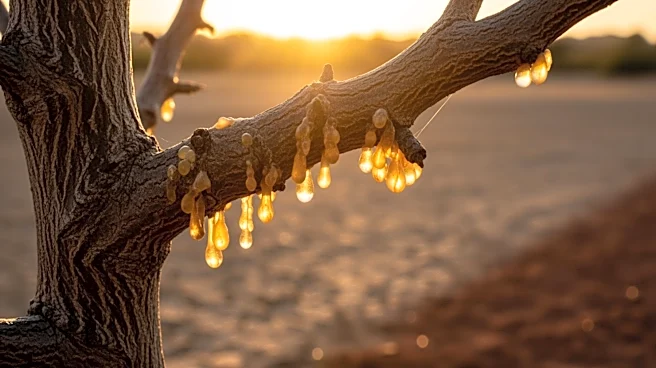
The myrrh tree, a critical source of resin used in luxury perfumes, is under threat due to a historic drought in the Somali region of Ethiopia. This drought has severely impacted the trees, which are also being damaged by livestock in search of food.
Researchers, supported by the American Herbal Products Association, have visited the region to assess the situation. The traditional harvesting methods, which involve collecting resin from naturally occurring wounds on the trees, are being maintained to protect the trees. However, the drought has led to a decrease in resin production and a decline in the survival of young trees. The local communities, who rely on myrrh for their livelihoods, are facing economic challenges as the resin's market value is not reflected in the prices they receive.
Why It's Important?
The situation in Ethiopia has significant implications for the global perfume industry, which relies on myrrh as a key ingredient. Luxury brands like Tom Ford and Jo Malone use myrrh in their high-end products, which can sell for up to $500 a bottle. The decline in myrrh production could lead to supply shortages and increased prices for these perfumes. Additionally, the economic impact on local communities in Ethiopia is profound, as many rely on myrrh harvesting for their income. The drought and its effects highlight the broader issue of climate change and its impact on traditional industries and vulnerable populations.
What's Next?
Efforts are being made to increase the visibility of the myrrh supply chain and ensure that local harvesters receive fair compensation. Researchers are advocating for direct market access for these communities to secure better prices and sustainable livelihoods. The ongoing drought and climate change pose a continued threat to the myrrh trees, and without intervention, the situation could worsen. The international community and stakeholders in the perfume industry may need to consider supporting sustainable practices and climate resilience initiatives in the region.
Beyond the Headlines
The myrrh crisis in Ethiopia underscores the ethical and environmental challenges faced by industries dependent on natural resources. The traditional harvesting methods, which are environmentally sustainable, contrast with the pressures of modern supply chains that often prioritize profit over sustainability. This situation raises questions about the responsibility of global brands to support sustainable practices and fair trade. The cultural significance of myrrh, used historically in religious and health practices, adds another layer of complexity to the issue, as its decline could affect cultural traditions and practices.