

What's Happening?
On August 6, 1965, President Lyndon B. Johnson signed the Voting Rights Act, a landmark law aimed at enforcing the 15th Amendment and ensuring voting rights for Black Americans. This legislation was a response to systemic racial discrimination in voting,
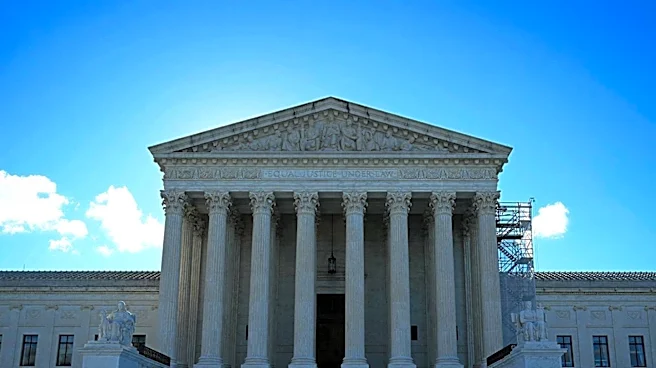
particularly in the southern United States. The Act empowered the federal government to oversee voter registration and elections in areas with a history of discrimination. Despite its success, recent Supreme Court decisions have weakened its provisions, leading to renewed concerns about voter suppression and racial disparities in voter turnout.
Why It's Important?
The Voting Rights Act is a cornerstone of American civil rights legislation, representing a significant step toward racial equality and democratic participation. Its weakening through recent court decisions raises critical questions about the state of voting rights in the U.S. and the ongoing struggle against voter suppression. The Act's history and current challenges highlight the importance of vigilance in protecting democratic processes and ensuring equal access to voting for all citizens, regardless of race or background.