




What's Happening?
North Dakota U.S. Senator John Hoeven recently organized a roundtable discussion in Dickinson, N.D., focusing on improvements for grasslands to be included in the upcoming Senate Farm Bill. The meeting brought together U.S. Forest Service Chief Tom Schultz,
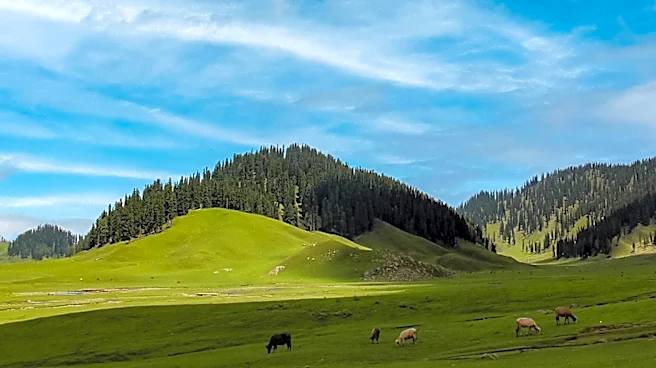
State Ag Commissioner Doug Goehring, and representatives from state grazing associations. Key issues addressed during the discussion included the establishment of mandatory country of origin labeling for beef sold in the U.S., a measure Senator Hoeven has consistently supported. Additionally, participants discussed strategies for managing prairie dog populations on National Grasslands and the reauthorization of a program dedicated to funding the improvement and restoration of grasslands in North Dakota. Senator Hoeven and Chief Schultz also emphasized the importance of enhancing access to these federal lands through infrastructure development, such as roads, to facilitate ranchers' access to their cattle. Weed control in grasslands was another significant point of discussion, highlighting the collective effort to maintain and improve these vital ecological and economic resources.
Why It's Important?
The discussions led by Senator Hoeven are crucial for North Dakota's agricultural sector and the broader U.S. economy, particularly concerning the beef industry and land management. Mandatory country of origin labeling for beef could significantly impact consumer choices and support domestic producers, potentially shifting market dynamics and increasing demand for U.S.-sourced beef. This measure aims to provide transparency to consumers, allowing them to make informed decisions based on where their food originates. Furthermore, the focus on managing prairie dogs and reauthorizing grassland restoration programs is vital for ecological balance and the sustainability of grazing lands. Improved access to federal lands through better infrastructure directly benefits ranchers, reducing operational costs and improving efficiency, which can translate to more stable food prices and a stronger local economy. North Dakota's federal lands, managed by the Forest Service, encompass over one million acres, making their effective management critical for the state's economic and environmental well-being.
What's Next?
The outcomes of this roundtable will inform Senator Hoeven's efforts in shaping the next Senate Farm Bill. The proposals discussed, such as mandatory country of origin labeling for beef and the reauthorization of grassland improvement programs, will likely be advanced as legislative priorities. Stakeholders, including ranchers, agricultural associations, and environmental groups, will be closely watching the legislative process to see if these recommendations are incorporated into the final bill. The emphasis on infrastructure improvements and weed control suggests potential future funding allocations and policy changes aimed at enhancing the usability and ecological health of federal grasslands. Continued collaboration between federal and state agencies, along with private sector input, will be essential to implement these proposed changes effectively. The reauthorization of funding for grassland restoration will be a key indicator of the commitment to long-term environmental stewardship and agricultural support in North Dakota.
Beyond the Headlines
Beyond the immediate policy implications, this initiative underscores a broader national conversation about food sovereignty, environmental stewardship, and the role of federal lands in supporting local economies. The push for mandatory country of origin labeling reflects a growing consumer demand for transparency and locally sourced products, which could influence agricultural practices and supply chains nationwide. The focus on prairie dog management highlights the complex challenges of balancing wildlife conservation with agricultural interests, often requiring innovative and collaborative solutions. Moreover, the discussion about improving access and controlling weeds on federal grasslands touches upon the delicate balance between economic development and ecological preservation. This effort could set a precedent for how other states manage their federal lands, promoting sustainable practices that benefit both the environment and the agricultural community. The long-term success of these initiatives will depend on sustained political will and adaptive management strategies.