





What's Happening?
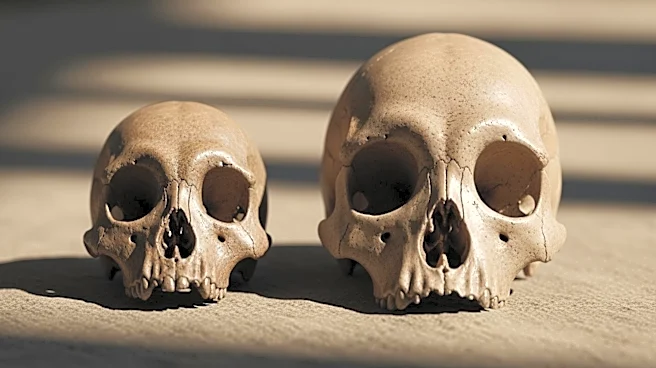
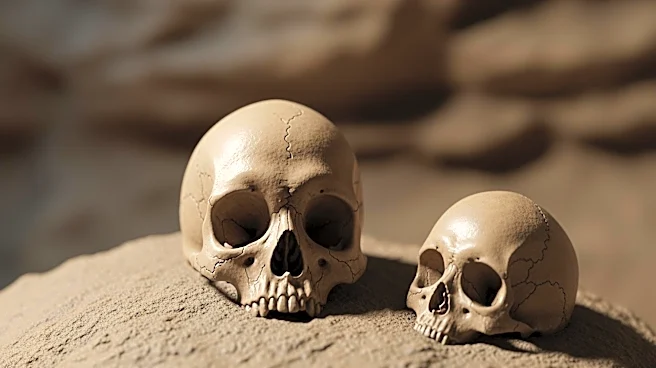
A recent study has found that Neanderthal infants were significantly larger and grew faster than modern human babies. Researchers from Israel and Europe analyzed the remains of a six-month-old Neanderthal child, discovering that it was comparable in size
to a one-year-old Homo sapien. The study, published in the journal Current Biology, highlights the robust nature of Neanderthal children, who developed quickly in response to the harsh conditions of their environment. The findings provide new insights into the development and adaptation of Neanderthals, who lived in Europe and Asia between 400,000 and 40,000 years ago.
Why It's Important?
The study of Neanderthal infants offers valuable information about the evolutionary differences between Neanderthals and modern humans. Understanding the growth patterns and physical characteristics of Neanderthals can shed light on their adaptation to environmental challenges and their survival strategies. This research contributes to the broader field of paleoanthropology, enhancing our knowledge of human evolution and the diversity of hominid species. The findings also highlight the importance of studying ancient remains to uncover the complexities of our ancestral past.
What's Next?
Further research is needed to explore the genetic and environmental factors that contributed to the rapid growth and robust nature of Neanderthal infants. Scientists may investigate the role of diet, climate, and social structures in shaping Neanderthal development. The study of additional Neanderthal remains could provide a more comprehensive understanding of their biology and behavior. As new technologies and methods are developed, researchers will continue to refine their understanding of Neanderthal life and their interactions with early modern humans.
Beyond the Headlines
The discovery of Neanderthal infant growth patterns raises questions about the evolutionary pressures that shaped the development of different hominid species. It prompts a reevaluation of the factors that influenced survival and adaptation in prehistoric environments. The study also highlights the interconnectedness of human evolution, as evidence of interbreeding between Neanderthals and modern humans suggests a shared genetic heritage. This research underscores the complexity of human ancestry and the ongoing quest to understand the origins of our species.