
What's Happening?
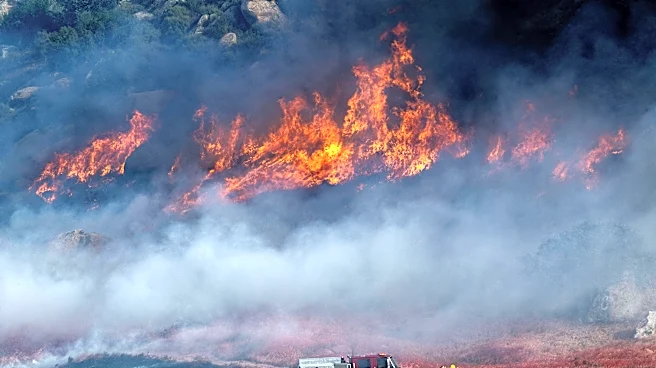
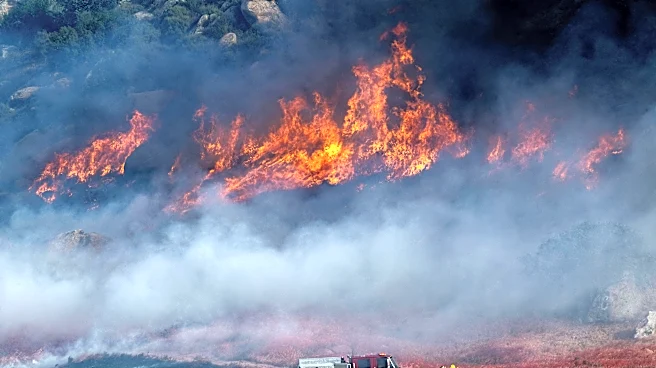
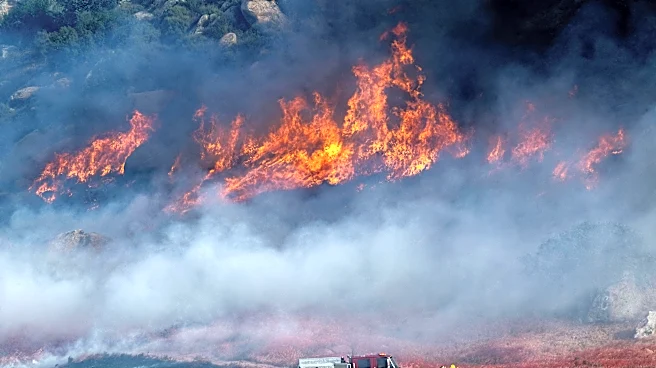
Firefighters in Southern California are currently engaged in efforts to control the Springs Fire, which is rapidly spreading east of Los Angeles. This fire outbreak follows a particularly dry winter across
several western states, compounded by a record-breaking heat wave affecting the region. The challenging weather conditions have exacerbated the fire's spread, making containment efforts more difficult. The Springs Fire is the latest in a series of wildfires that have plagued the area, highlighting the ongoing vulnerability of the region to such natural disasters.
Why It's Important?
The Springs Fire underscores the increasing frequency and intensity of wildfires in the western United States, a trend that poses significant risks to communities, ecosystems, and infrastructure. The combination of dry winters and extreme heat waves creates ideal conditions for wildfires, which can lead to widespread destruction and displacement. The economic impact is also substantial, as firefighting efforts require significant resources and can strain local and state budgets. Additionally, the fires contribute to air quality issues, affecting public health and safety. The situation highlights the urgent need for effective fire management strategies and climate adaptation measures.
What's Next?
As firefighters continue to battle the Springs Fire, efforts will focus on containment and preventing the fire from reaching populated areas. Authorities may implement evacuation orders if the fire threatens residential zones. In the longer term, there may be increased calls for policy changes to address the root causes of such fires, including climate change mitigation and improved land management practices. The ongoing situation will likely prompt discussions among policymakers, environmental groups, and the public about sustainable solutions to reduce the risk of future wildfires.