






What's Happening?
Teresa Ochoa Briseño, the mother of a 17-year-old seen in a viral video being detained by ICE officers in Alamo, Texas, has been arrested and deported to Mexico. According to an ICE statement, Briseño was a 'criminal' who had re-entered the U.S. without
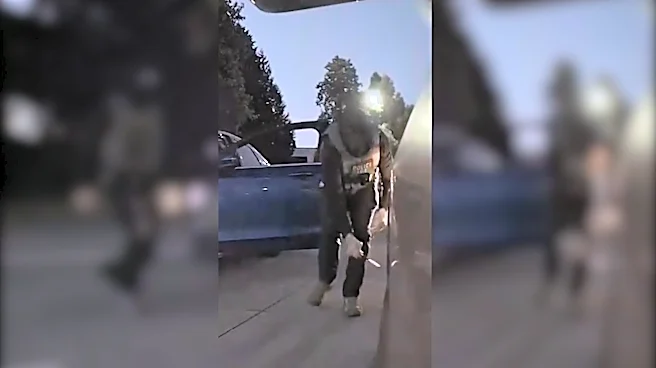
permission after a previous deportation in 2025 following an arrest on assault charges. She was served with an order of expedited removal on September 21 and subsequently deported. Her son, Luis Ochoa, was detained on September 11 while recording an ICE operation, an incident where he claims he was pepper-sprayed and had his wrist broken. A DHS official stated the teens were arrested for obstructing officers during a vehicle stop. Immigration attorney Carlos M. Garcia expressed concern over the timing of Briseño's detention, suggesting a potential link to her son's widely publicized encounter with ICE, raising questions about First Amendment rights.
Why It's Important?
This deportation highlights the U.S. government's strict enforcement of immigration laws, particularly concerning individuals with prior deportation orders and criminal records. The case also brings to the forefront the contentious issue of civilian recording of law enforcement activities and potential repercussions. The attorney's suggestion of a link between the son's viral video and the mother's deportation raises concerns about freedom of speech and potential retaliation against those who document or speak out against immigration enforcement actions. This incident could deter others from recording ICE operations, impacting transparency and public oversight of federal agencies. Furthermore, it underscores the ongoing debate about the balance between immigration enforcement and civil liberties in the U.S.
What's Next?
The deportation of Teresa Ochoa Briseño is likely a final action, with ICE stating she was removed to Mexico. However, the broader implications of this case may continue to unfold. Immigration advocacy groups and civil liberties organizations may use this incident to further their arguments against certain ICE practices and to advocate for stronger protections for individuals documenting law enforcement. The legal community may also scrutinize the circumstances surrounding Briseño's deportation, especially given the attorney's concerns about its timing. This event could also influence public discourse and policy debates regarding immigration enforcement tactics and the rights of individuals, both citizens and non-citizens, during such operations.
Beyond the Headlines
Beyond the immediate deportation, this case touches upon deeper ethical and legal dimensions concerning immigration enforcement in the U.S. The alleged use of force against the teens and the subsequent deportation of the mother, regardless of her immigration status, fuel the ongoing debate about the humanity and proportionality of immigration policies. It also raises questions about the chilling effect such incidents might have on communities, potentially fostering distrust between immigrant populations and law enforcement. The narrative of 'criminal illegal alien' used by ICE in its statement, while legally accurate from their perspective, often contributes to a broader dehumanization of undocumented immigrants, impacting public perception and policy discussions. This incident serves as a stark reminder of the complex and often harsh realities faced by families navigating the U.S. immigration system.