






What's Happening?
NASA mechanics, in collaboration with Lockheed Martin Skunk Works, are routinely performing a maintenance procedure known as 'duct diving' on the X-59 quiet supersonic aircraft. This involves a mechanic, such as Johnathan Reynaga, entering the aircraft's
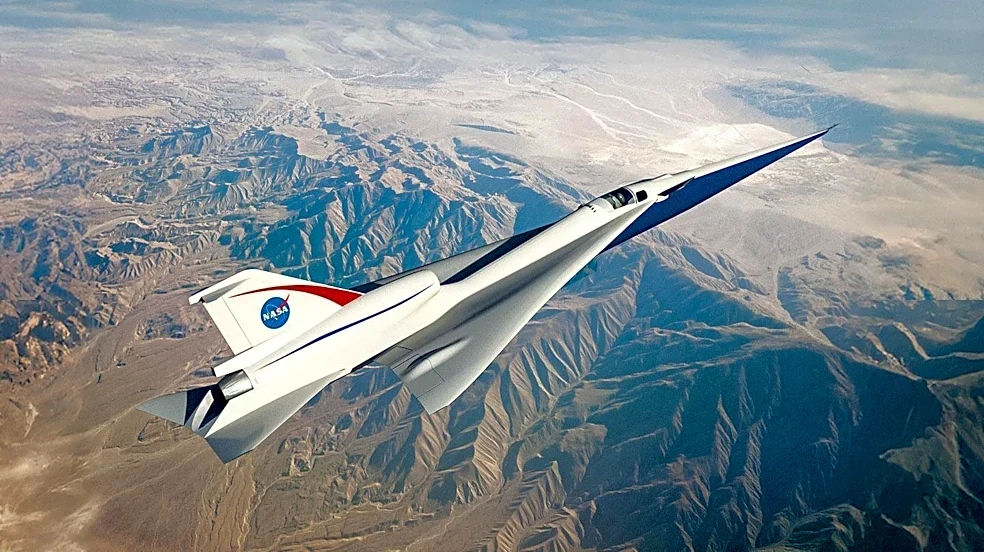
air inlet to visually inspect the engine's fan blades and other components for damage or foreign objects. This procedure is considered normal for aircraft maintenance and is crucial for quickly assessing the engine's health after each flight. The X-59, designed to separate shock waves during supersonic flight to produce a quiet sonic thump instead of a boom, has a top-mounted engine. This design minimizes the ingestion of debris during takeoffs and landings, contributing to the engine's consistent damage-free status observed during these inspections after 38 flights.
Why It's Important?
The 'duct diving' maintenance procedure is vital for ensuring the safety and operational integrity of NASA's X-59 aircraft, a key component of the Low Boom Flight Demonstrator project. This meticulous inspection process, despite its seemingly unusual nature, is currently the most effective way to detect potential issues that could compromise engine performance or flight safety. The X-59's unique top-mounted engine design, which helps mitigate debris ingestion, is a significant factor in its consistent performance, as confirmed by these inspections. The success of the X-59 in achieving a quiet sonic thump is critical for the future of supersonic flight over land, potentially leading to new regulations that could open up commercial supersonic travel. The ongoing maintenance and the positive findings from these inspections underscore the reliability and innovative engineering behind this experimental aircraft.
What's Next?
Routine 'duct diving' inspections will continue as part of the X-59's ongoing flight test campaign. These inspections, coupled with more in-depth maintenance on a regular schedule, will ensure the aircraft remains in optimal condition for its mission to gather data on quiet supersonic flight. The data collected from the X-59's flights and its maintenance records will be crucial for informing future aircraft designs and regulatory changes regarding supersonic travel. As the X-59 continues its test flights, the consistency of damage-free engine inspections will further validate its innovative design and maintenance protocols. The ultimate goal is to provide sufficient data to regulatory bodies to potentially revise current restrictions on supersonic flight over populated areas.
Beyond the Headlines
The 'duct diving' practice on the X-59 highlights the enduring reliance on human expertise and sensory perception in highly advanced technological fields, even in an era of increasing automation. While sophisticated sensors and diagnostic tools are prevalent, the human eye and tactile inspection remain indispensable for certain critical checks, especially in complex systems like aircraft engines. This underscores a broader ethical consideration in technological advancement: the balance between automation and human involvement, particularly where safety and nuanced assessment are paramount. The X-59's design, which minimizes debris ingestion, also points to a long-term shift in aerospace engineering towards integrated design solutions that reduce maintenance needs and enhance operational safety, potentially influencing future commercial aircraft development. This blend of human skill and innovative engineering is crucial for pushing the boundaries of aviation.