





What's Happening?
The Sandpoint Planning and Zoning Commission has voted 6-1 to recommend that the City Council approve a significant overhaul of the city's zoning code. This proposed revision includes the establishment of distinct downtown zone districts, a restructuring
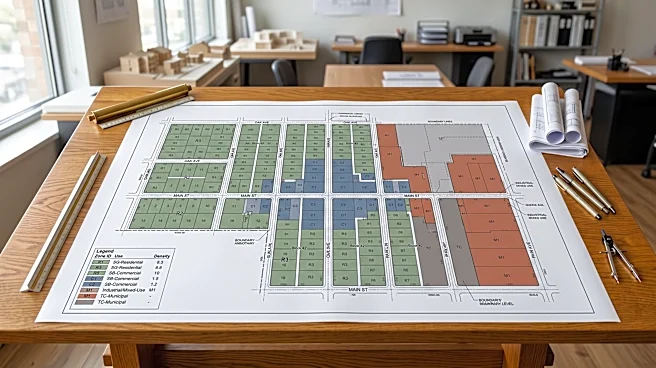
of the commercial corridor into nodes, and the introduction of a Historic Preservation chapter. Key components of the update involve capping building heights at 40 feet in the historic overlay district, 45 feet in the downtown inner core, and 55 feet in the outer downtown core. The current Commercial A zone allows for heights up to 65 feet. Additionally, the new code would eliminate the requirement for ground-floor retail in most commercial zones, aiming to permit more mixed-use and residential-only downtown uses. New 'Community Commercial' and 'Neighborhood Commercial' zones are also proposed to increase land use flexibility and provide transitional buffers.
Why It's Important?
This zoning code overhaul is important for Sandpoint as it aims to shape the city's future development, economic landscape, and community character. The establishment of new commercial zones and the elimination of mandatory ground-floor retail could open up new market possibilities for developers, potentially stimulating economic growth and diversifying downtown uses. However, the proposed building height restrictions, particularly the 40-foot cap in the historic overlay district, have raised concerns among some commissioners, who argue it might deter redevelopment and 'freeze' certain areas in time. The changes could impact property values, business viability, and the overall aesthetic of the city, balancing preservation efforts with development needs. The decision will affect residents, businesses, and potential investors in Sandpoint.
What's Next?
The recommended zoning changes are scheduled to go before the Sandpoint City Council at its regular meeting on Wednesday, December 2. If approved by the City Council, the new zoning code would go into effect on January 1, 2027. The public and various stakeholders, including developers, business owners, and residents, will be closely watching the City Council's decision. Debates, particularly concerning building height restrictions and their potential impact on development, are expected to continue. The outcome will determine the regulatory framework for future construction and land use in Sandpoint for years to come, influencing everything from housing availability to commercial vibrancy.
Beyond the Headlines
The Sandpoint zoning overhaul reflects a broader national tension between urban development and historic preservation, as well as the evolving understanding of commercial viability in downtown areas. The move to eliminate mandatory ground-floor retail acknowledges that traditional retail models may not be sustainable across all commercial zones, allowing for more flexible mixed-use developments that could include residential or office spaces. This shift could lead to more vibrant, walkable communities that cater to diverse needs beyond just shopping. However, the debate over building heights highlights the challenge of balancing economic incentives for developers with community desires for maintaining a specific aesthetic or 'small-town' feel. The decision will set a precedent for how Sandpoint manages growth while attempting to preserve its unique character.