






What's Happening?
The United States has announced a new wave of economic sanctions against Iran and is threatening secondary sanctions on countries that continue to trade with Tehran. This initiative, dubbed 'Operation Economic Outcast,' aims to sever Iran's economic lifelines,
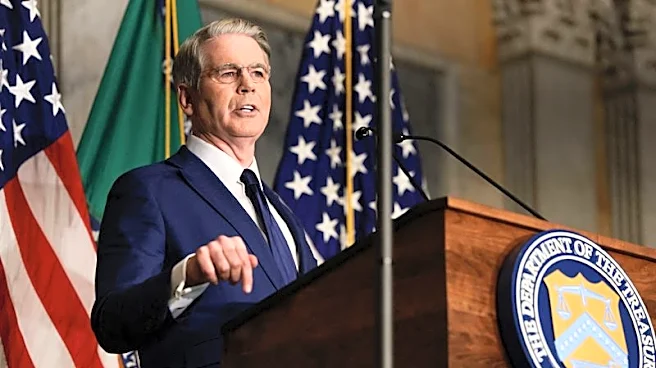
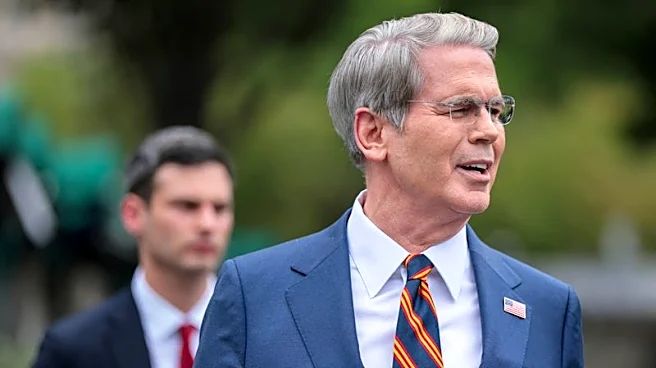
particularly targeting its oil revenues. U.S. Treasury Secretary Scott Bessent stated that countries globally must choose between the U.S. and Iran, warning that those facilitating transactions with Iran will face 'tremendous economic consequences.' This move follows President Trump's earlier declaration of the 'most crushing economic operation' against Iran. The U.S. has a history of employing secondary sanctions, where entities trading with a sanctioned country also face penalties. For instance, the Countering America’s Adversaries Through Sanctions Act (CAATSA) of 2017 targeted Iran, Russia, and North Korea, leading to sanctions against China's military and NATO-member Turkey for purchasing Russian defense systems. The current campaign targets at least 60 entities across the Middle East, Asia, and Europe, potentially disrupting energy markets and the global economy.
Why It's Important?
This escalation of secondary sanctions against Iran's trading partners carries significant implications for global commerce and international relations. The U.S. leverages its market and financial system access to enforce these sanctions, making global banks and financial institutions wary of any dealings with sanctioned entities to avoid losing access to the U.S. financial system. This approach can compel countries and companies to cease trade with Iran, thereby isolating its economy. However, the effectiveness of these sanctions is contingent on the trading partners' reliance on the American financial system. For major partners like China and Russia, particularly in sectors such as oil refineries, this reliance may be minimal, potentially limiting the U.S.'s leverage. The strategy could also provoke retaliatory measures, as suggested by analysts regarding China's potential response if its banks are sanctioned for processing Iranian funds. The broader impact could include further disruptions to global supply chains and increased volatility in energy markets, affecting consumers and businesses worldwide.
What's Next?
The immediate future will likely see countries and companies re-evaluating their trade relationships with Iran to avoid U.S. secondary sanctions. Treasury Secretary Bessent indicated that the U.S. is offering an 'opportunity to remedy bad behavior' before imposing penalties, suggesting a period of diplomatic pressure and warnings. However, if entities continue to engage with Iran, the U.S. is expected to implement the threatened sanctions, potentially leading to significant financial repercussions for those involved. The response from Iran's major trading partners, particularly China and Russia, will be crucial. Their willingness to comply with U.S. demands or to find alternative trade mechanisms will determine the ultimate impact of 'Operation Economic Outcast.' The situation could also lead to increased geopolitical tensions as nations navigate the complex landscape of U.S. sanctions and their own economic interests. The U.S. will likely monitor global trade flows and financial transactions closely to identify and target non-compliant entities.
Beyond the Headlines
The aggressive use of secondary sanctions by the U.S. raises fundamental questions about national sovereignty and the extraterritorial reach of U.S. law. By compelling third-party nations to align their trade policies with U.S. foreign policy objectives, these sanctions challenge the traditional norms of international trade and diplomacy. This approach could foster resentment among nations feeling coerced, potentially leading to efforts to de-dollarize global trade or establish alternative financial systems less susceptible to U.S. influence. Furthermore, the strategy highlights the weaponization of economic interdependence, where access to the U.S. market and financial system becomes a powerful tool for geopolitical leverage. The long-term implications could include a fragmentation of the global economy into blocs aligned with different major powers, each with its own set of trade rules and financial networks, ultimately reshaping the international economic order.