


What's Happening?
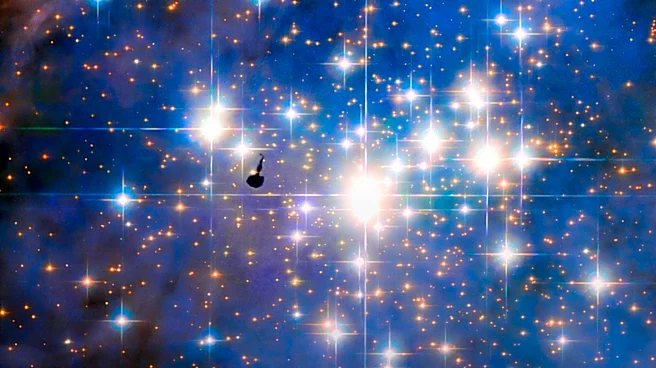
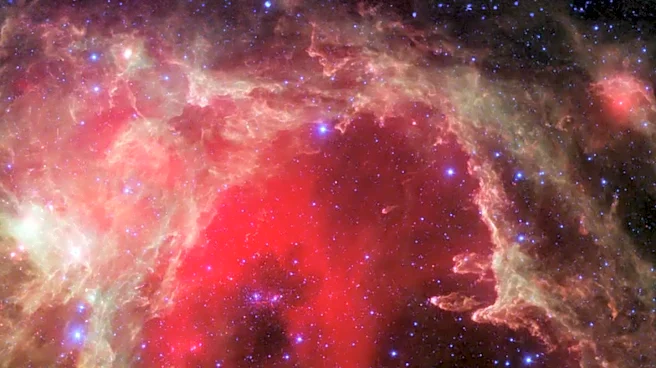
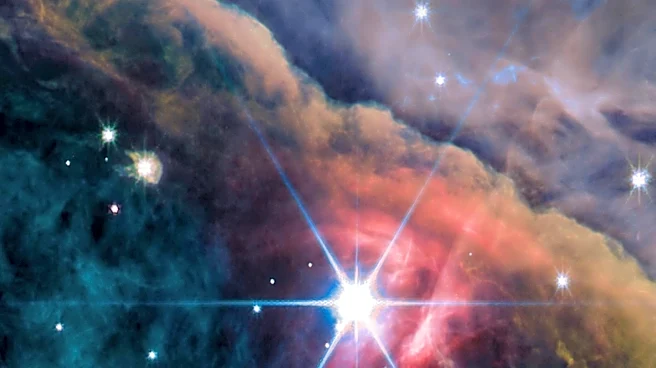
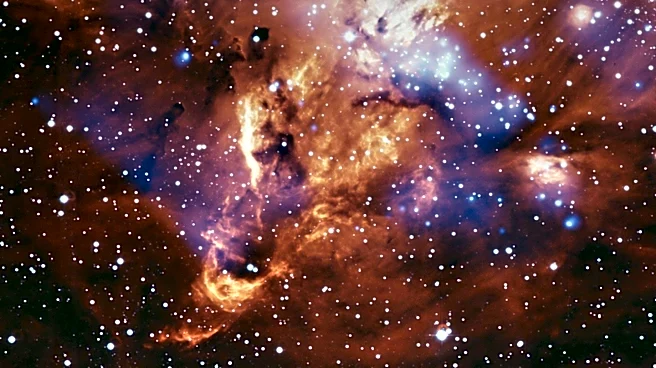
NASA scientists have released vibrant new images of the Tarantula Nebula, located in the Large Magellanic Cloud, using data from multiple space telescopes including Chandra, Hubble, Webb, and Spitzer. The composite image reveals thousands of young stars
within a complex structure of gas and dust. The nebula is losing energy as hot gas leaks out, and thermal conduction transfers heat to cooler shell material. These observations provide new insights into the processes of star formation and the lifecycle of nebulae.
Why It's Important?
The Tarantula Nebula is a key region for studying star formation due to its proximity and the abundance of young stars. Understanding the energy dynamics and material composition of such nebulae is crucial for astrophysics, as it informs theories about how stars and planetary systems form and evolve. The detailed imagery and data from this study enhance our knowledge of cosmic processes and the conditions that lead to star and planet formation.