




What's Happening?
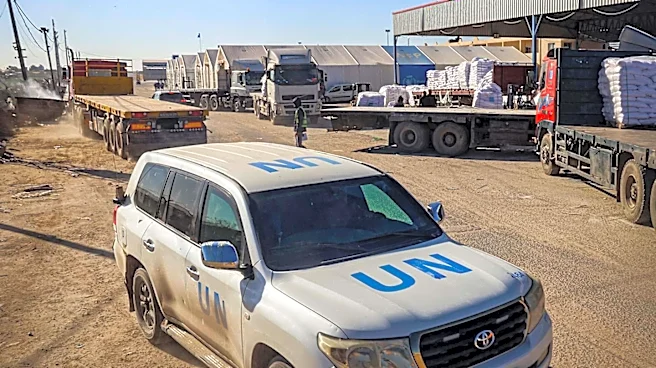
The United Nations has reported a 33% increase in the volume of humanitarian aid supplies entering the Gaza Strip in July 2026. This increase, amounting to over 55,000 pallets or approximately 35,000 metric tons, marks a significant rise compared to June.
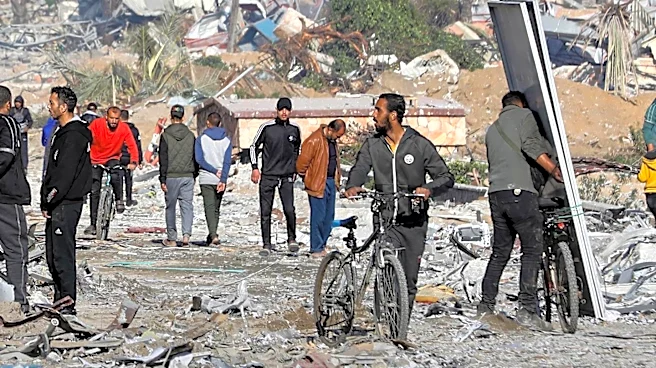
Despite this influx, critical restrictions on the types of supplies allowed into Gaza remain, as humanitarian needs in the region continue to be immense. The majority of the supplies consist of food, with smaller quantities of shelter, water, sanitation, hygiene, and health items. The UN also highlighted the ongoing humanitarian challenges in the occupied West Bank, where recent military operations have caused widespread damage to homes and businesses.
Why It's Important?
The increase in aid supplies is crucial for addressing the severe humanitarian needs in Gaza, which have been exacerbated by ongoing regional conflicts. However, the persistent restrictions on aid types highlight the complex political and logistical challenges in delivering comprehensive humanitarian assistance. The situation underscores the need for sustained international attention and intervention to ensure that essential goods reach those in need. The broader implications include potential impacts on regional stability and the well-being of the civilian population, which remains vulnerable due to the protracted conflict.
What's Next?
The UN and its partners are likely to continue advocating for the easing of restrictions to facilitate the delivery of a broader range of essential supplies. Ongoing diplomatic efforts may focus on negotiating access and ensuring the protection of humanitarian corridors. The international community may also increase pressure on involved parties to address the root causes of the conflict and improve the humanitarian situation. Monitoring the situation in both Gaza and the West Bank will be critical to assessing the effectiveness of aid efforts and the potential for future escalations.