








What's Happening?
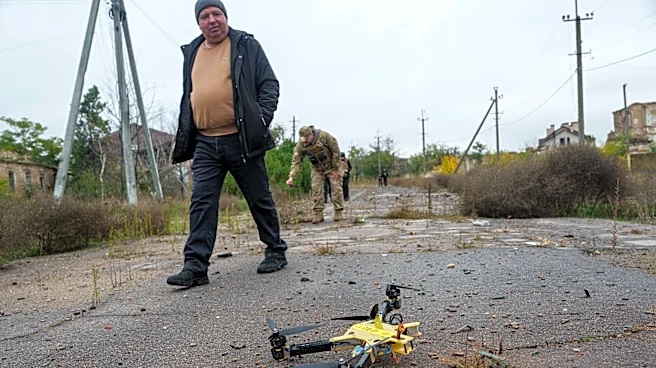
Throughout October 2026, Ukrainian long-range drones launched a series of attacks on major Russian data centers belonging to prominent technology corporations. These strikes disrupted banking, electronic payments, commercial transactions, cloud computing,
and elements of the Russian judicial system. Key targets included Yandex facilities in Sasovo, Kaluga, and Vladimir, with two Yandex data centers forced to suspend operations. Attacks also hit a major Sberbank data center in Balakovo and a VK facility, Russia's leading social media platform. Additionally, a data center associated with Russia's Federal Tax Service in Gorodets was reportedly struck. These attacks have exposed vulnerabilities in Russia's digital infrastructure, forcing major technology companies to undertake emergency reorganizations and transfer workloads to alternative facilities. The Kremlin has responded with emergency measures, including a presidential decree requiring private data centers to make part of their computing capacity available to the state and recommendations for constructing new strategically important data centers underground or in reinforced bunkers.
Why It's Important?
These attacks represent a significant evolution in contemporary warfare, targeting the digital infrastructure that underpins modern states. By disrupting data centers, Ukraine aims to impose substantial economic and technological costs on Russia, affecting thousands of businesses and millions of individual transactions. The strikes particularly threaten Russia's ambitions in artificial intelligence, as facilities housing supercomputers vital for AI development, such as Yandex's Lyapunov, Chervonenkis, and Galushkin systems, may have been damaged. Replacing such specialized, high-performance equipment is difficult due to Western economic sanctions restricting access to advanced semiconductors. This campaign challenges Russia's digital sovereignty strategy, which concentrated electronic infrastructure within its borders, inadvertently creating concentrated, vulnerable assets. The attacks force Russia to divert resources from technological innovation to infrastructure protection, impacting its long-term economic and technological development.
What's Next?
Russia is expected to continue implementing measures to harden its digital infrastructure against future attacks. This includes accelerating the construction of underground or reinforced data centers, enhancing physical defenses, and improving cybersecurity. The presidential decree mandating the reservation of computing capacity in private data centers will likely be enforced, creating a national emergency reserve. Russia may also explore temporary use of foreign computing resources, a significant departure from its digital sovereignty policy. Ukrainian attacks are likely to continue, pushing Russia to further adapt its digital architecture. The long-term effectiveness of these attacks will depend on the extent of physical damage, Russia's ability to replace equipment under sanctions, and its success in reorganizing its infrastructure for resilience.
Beyond the Headlines
The Ukrainian campaign against Russian data centers highlights the increasing vulnerability of modern, digitally dependent societies to military attacks on technological systems. This conflict demonstrates that economic and administrative paralysis can be achieved without traditional military engagements. The paradox of Russia's digital sovereignty policy—intended to reduce foreign dependence but increasing exposure to physical attack—offers a critical lesson for other nations. The ethical and legal implications of targeting civilian computing infrastructure are also significant, raising questions about international humanitarian law and the distinction between military and civilian objectives in the digital age. As states increasingly integrate military and civilian computing requirements, the task of protecting civilians from the consequences of such attacks becomes more complex, potentially leading to new international norms and regulations for cyber warfare and critical infrastructure protection.