





What's Happening?
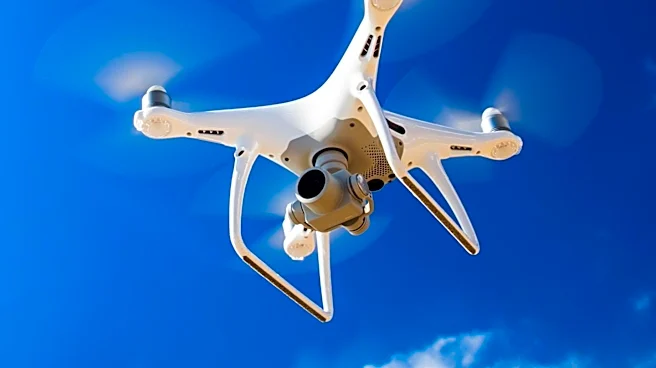
The city of Mission Viejo in Southern California is revolutionizing lost pet searches by deploying drones equipped with lasers and thermal imaging. Animal control officers, such as Kyle Werner, report that this technology has drastically reduced search times
from days or weeks to mere minutes. A recent incident involved a small terrier spotted in a freeway carpool lane, where a drone quickly located the dog and guided ground units for a swift rescue. The drone's capabilities were also crucial in finding a dog named Lana in dense brush and locating a skittish dog named Josie, allowing her owner to be directed to her exact location. The drone, costing nearly $17,000, was acquired through private donations, and other agencies are reportedly showing interest in adopting this method.
Why It's Important?
The adoption of drone technology by Mission Viejo Animal Services represents a significant advancement in animal welfare and public safety in the U.S. Traditional methods for finding lost pets are often time-consuming and less effective, especially in challenging terrains or high-risk areas like freeways. Drones with thermal imaging can detect animal heat signatures over large areas, dramatically increasing the chances of a successful and timely reunion between pets and their owners. This innovation not only improves the efficiency of animal control operations but also enhances the safety of both animals and officers during rescues. The success in Mission Viejo could serve as a model for other municipalities across the nation, potentially leading to widespread implementation and a positive impact on countless pet owners and their communities.
What's Next?
The success of Mission Viejo's drone program for lost pet recovery is likely to spark increased interest and adoption by other animal control agencies and municipalities across the United States. As Kyle Werner noted, other agencies are already inquiring about the technology. This could lead to a broader trend of integrating advanced technological solutions, such as drones, into local government services for animal welfare. Future developments might include further enhancements to drone capabilities, such as improved AI for animal detection or longer flight times. The initial investment, funded by private donations in Mission Viejo's case, suggests that creative funding models may be explored by other communities looking to implement similar programs. The ultimate goal will be to standardize and scale these efficient rescue methods nationwide.
Beyond the Headlines
The use of drones for lost pet recovery highlights a broader societal trend of leveraging advanced technology for humanitarian and community-focused applications. Beyond the immediate benefit of reuniting pets with their families, this initiative touches upon ethical considerations regarding privacy and surveillance, even in the context of animal welfare. The successful implementation in Mission Viejo demonstrates how public-private partnerships (private donations funding public services) can drive innovation in local governance. Furthermore, it underscores the evolving role of animal control officers, who are increasingly becoming adept at utilizing sophisticated tools. This shift could lead to new training requirements and a redefinition of best practices in animal services, emphasizing technological proficiency alongside traditional animal handling skills. The emotional impact of reuniting pets with owners, described as 'completely invaluable,' also reinforces the deep bond between humans and animals, making such technological investments highly valued by communities.