







What's Happening?
Minneapolis Mayor Jacob Frey has vetoed a local requirement that would have mandated human safety monitors in driverless cars. This decision creates a fragmented regulatory environment within the Twin Cities, as St. Paul is moving forward with a comprehensive
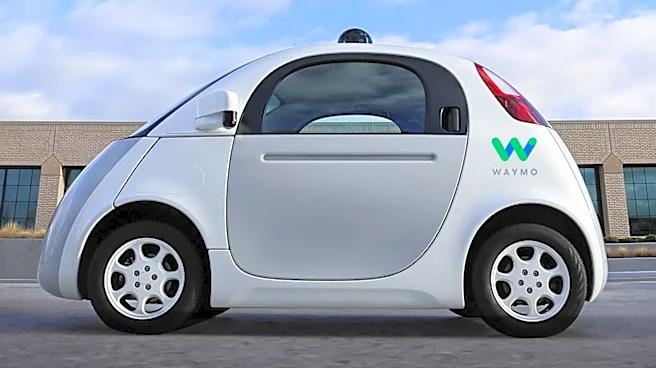
study on autonomous vehicle integration, aiming to establish its own regulatory framework. The St. Paul City Council unanimously approved a resolution to conduct this study, which will analyze the potential effects of autonomous vehicles on public transit, labor markets, and data privacy. Waymo, a developer of autonomous driving technology, is currently mapping routes in the Twin Cities region, indicating an active interest in deploying these services locally. The St. Paul Planning Commission's Transportation Committee is tasked with gathering input from various stakeholders, including labor groups, disability advocates, and public safety representatives, to inform their recommendations.
Why It's Important?
Mayor Frey's veto highlights a growing tension between technological innovation and local regulatory control, particularly concerning public safety and labor implications. The differing approaches between Minneapolis and St. Paul could lead to a complex and inconsistent operational landscape for autonomous vehicle companies in the Twin Cities. This fragmentation may pose challenges for companies like Waymo, which seek to deploy services across metropolitan areas, potentially increasing operational costs and regulatory hurdles. For residents, the lack of a unified regional strategy could result in varying safety standards and service availability depending on their specific city. Labor groups are particularly concerned about job displacement due to automation, while disability advocates emphasize accessibility and safety for all users. The outcome of St. Paul's study and its subsequent regulations will be crucial in shaping the future of autonomous vehicle deployment and its societal impact in the region.
What's Next?
The St. Paul Planning Commission will proceed with its study, coordinating through its Transportation Committee to gather input from various stakeholders. This process is expected to lead to recommendations that will directly influence how commercial driverless services are permitted to operate on city streets in St. Paul. Residents can anticipate public sessions involving labor organizations and public safety representatives to discuss future transit regulations. The city's proactive approach aims to balance innovation with public safety and labor concerns, potentially setting a precedent for other municipalities grappling with emerging technologies. The contrast with Minneapolis's regulatory stance suggests that autonomous vehicle companies may need to navigate distinct local rules, which could impact their expansion strategies and timelines in the broader Twin Cities area.
Beyond the Headlines
The divergence in regulatory strategies between Minneapolis and St. Paul reflects a broader national debate on how local governments should manage rapidly advancing technologies like autonomous vehicles. This situation underscores the challenges of balancing economic development and technological progress with public welfare and safety. The decisions made at the municipal level can have significant long-term implications for urban planning, infrastructure development, and the future of work. Furthermore, the involvement of various advocacy groups highlights the ethical and social dimensions of autonomous technology, including questions of equitable access, data privacy, and the responsibility of technology developers and regulators. The Twin Cities' experience could serve as a case study for other U.S. cities as they confront similar issues in integrating new technologies into their urban fabric.