








What's Happening?
Gina E. Gonzales, a California resident, has filed a maritime personal injury lawsuit against Royal Caribbean Cruises Ltd. in the Southern District of Florida. The lawsuit, filed under Case No. 1:26-cv-27590-KMW, alleges that Gonzales suffered severe
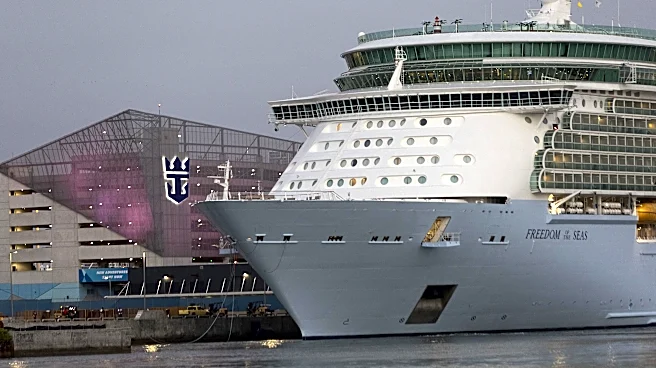
and permanent injuries after slipping and falling backward on poorly lit stairs in the ship theater aboard the Freedom of the Seas on November 18, 2025. According to the complaint, the incident occurred as Gonzales was navigating the Deck 3 theater to find her seat when the lights suddenly dimmed, leaving the stairway inadequately illuminated. This abrupt change in visibility allegedly caused her to fall, resulting in injuries to her head and the left side of her body. The lawsuit claims Royal Caribbean failed to provide sufficient floor lighting, warning signs, or crew assistance to guide passengers safely in low visibility conditions. Gonzales asserts that the hazardous lighting conditions were not known to her nor adequately communicated by the cruise line prior to the incident.
Why It's Important?
This lawsuit highlights critical safety concerns within the cruise industry, particularly regarding passenger areas like theaters where lighting conditions can change rapidly. The plaintiff's claim that Royal Caribbean had prior knowledge of similar incidents across its fleet, citing multiple previous lawsuits involving slip and fall accidents in dimly lit theaters on other ships (Grandeur of the Seas, Symphony of the Seas, Odyssey of the Seas, Rhapsody of the Seas, and even a prior incident on the Freedom of the Seas in May 2022), suggests a potential systemic issue. If proven, this could indicate a failure by the cruise line to implement necessary corrective measures despite a history of passenger injuries. The outcome of this case could influence how cruise lines design and manage lighting in entertainment venues, potentially leading to stricter safety protocols, increased crew presence for guidance, and improved warning systems to prevent future accidents. It also underscores the importance of cruise lines' duty to maintain safe environments for their passengers, especially in areas where visibility may be compromised.
What's Next?
The lawsuit will proceed in the Southern District of Florida, where both parties will engage in discovery, exchanging information and evidence related to the incident. Royal Caribbean will likely respond to the allegations, potentially arguing that it met its duty of care or that the plaintiff contributed to her own injuries. The court will examine evidence regarding the lighting conditions, Royal Caribbean's safety protocols, and the company's knowledge of prior similar incidents. Legal proceedings in maritime personal injury cases can be lengthy, often involving expert testimony on ship safety, lighting design, and medical assessments of the plaintiff's injuries. A settlement could be reached at any stage, or the case could proceed to trial. The outcome could set a precedent for how cruise lines are held accountable for passenger safety in entertainment venues and may prompt industry-wide reviews of safety standards for lighting and passenger guidance in low-light environments.
Beyond the Headlines
Beyond the immediate legal implications, this case touches upon the broader ethical responsibilities of large corporations like Royal Caribbean to ensure the safety and well-being of their customers. The repeated nature of similar incidents, as alleged in the lawsuit, raises questions about corporate accountability and whether profit motives might sometimes overshadow safety investments. If a pattern of negligence is established, it could lead to increased scrutiny from regulatory bodies and consumer advocacy groups, potentially impacting Royal Caribbean's reputation and brand trust. Furthermore, the case highlights the complexities of maritime law, which often governs incidents on cruise ships and can differ significantly from land-based personal injury laws. Passengers injured on cruises often face specific legal challenges, including contractual limitations on the time to file claims and designated forums for litigation, as cruise tickets are generally treated as binding contracts. This case serves as a reminder for passengers to be aware of their rights and the specific legal frameworks governing cruise travel.