



What's Happening?
The Draconid meteor shower is set to be active from October 6 to 10, 2026, with its peak viewing period expected on the night of October 8-9. Unlike many other meteor showers, the Draconids are notable for being visible early in the evening, making them
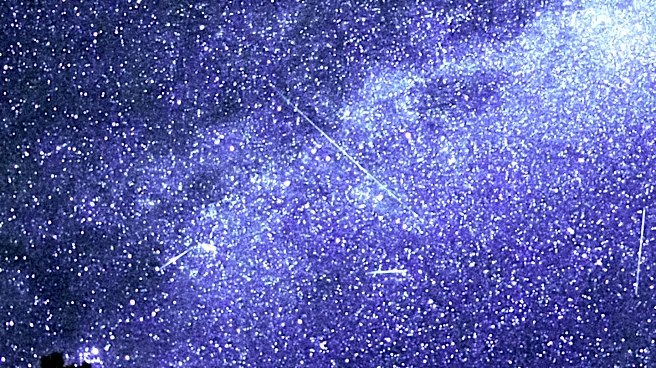
accessible to a wider audience. The peak is theoretically around 3:00 a.m. Paris time on October 9, but the early evening visibility is a key characteristic. Optimal viewing conditions are anticipated due to a New Moon on October 10, 2026, which will result in a nearly invisible moon and a dark sky, free from light pollution. The shower originates from the dust left by comet 21P/Giacobini-Zinner. While average activity is typically 5 to 10 meteors per hour, their slow entry into the atmosphere at approximately 20 km/s allows them to leave long, easily observable trails.
Why It's Important?
The Draconid meteor shower offers a unique astronomical event that is particularly accessible to the general public, including families and those who might not typically stay up late for stargazing. Its early evening visibility removes a significant barrier to participation, fostering greater public engagement with astronomy. The near-absence of moonlight during the peak viewing period enhances the experience, allowing for clearer observation of the meteors. This event provides an opportunity for educational outreach about comets, meteor showers, and celestial mechanics. While the number of meteors per hour is not as high as some other showers, the distinct slow-moving nature of Draconids offers a different and equally captivating viewing experience, potentially inspiring interest in science and space among new audiences.
What's Next?
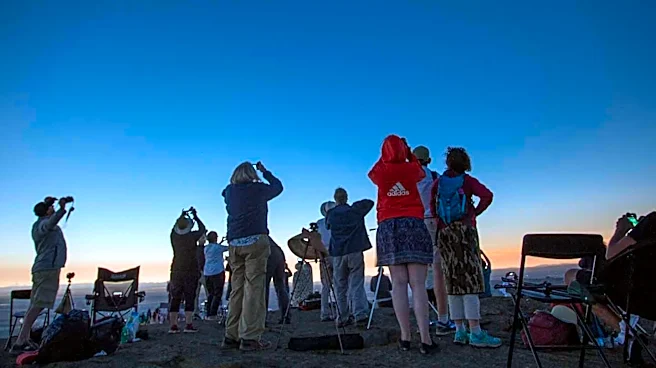
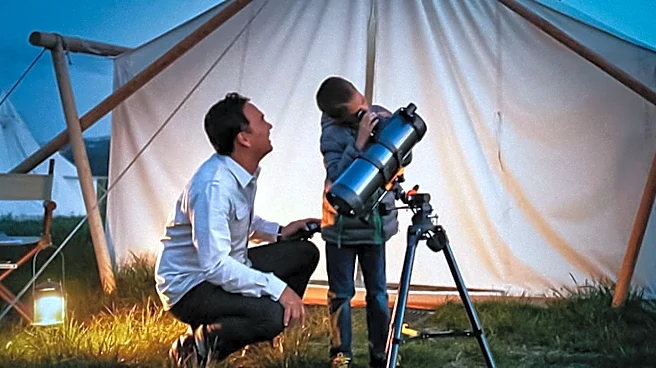
Individuals interested in observing the Draconid meteor shower in 2026 should plan for the night of October 8-9. No special equipment is required, only a dark location away from city lights, a comfortable viewing setup like a deck chair, and warm clothing. Viewers should allow their eyes about twenty minutes to adjust to the darkness and avoid using bright screens. Astronomy applications can assist in locating the Dragon constellation, the radiant point of the shower. While the peak is on October 8-9, the nights of October 7 and 9 could also offer interesting viewing opportunities if weather conditions are favorable. For those who miss the Draconids, the Orionid meteor shower, active from October 2 to November 7, 2026, with a peak on October 21-22, will provide another chance to observe shooting stars.
Beyond the Headlines
The Draconid meteor shower, despite its generally lower meteor count compared to more famous showers like the Perseids, holds a special place in astronomical observation due to its historical unpredictability. Past events in 1933 and 1946 saw meteor storms with over 10,000 shooting stars per hour, a phenomenon that continues to fascinate astronomers. While such intense activity is not predicted for 2026, the shower's history underscores the dynamic and sometimes surprising nature of celestial events. This unpredictability highlights the ongoing scientific value of observing even seemingly modest meteor showers, as they can offer insights into cometary dust trails and their interactions with Earth's atmosphere. The accessibility of the Draconids also promotes a broader cultural appreciation for the night sky, encouraging a connection with natural phenomena in an increasingly urbanized world.