



What's Happening?
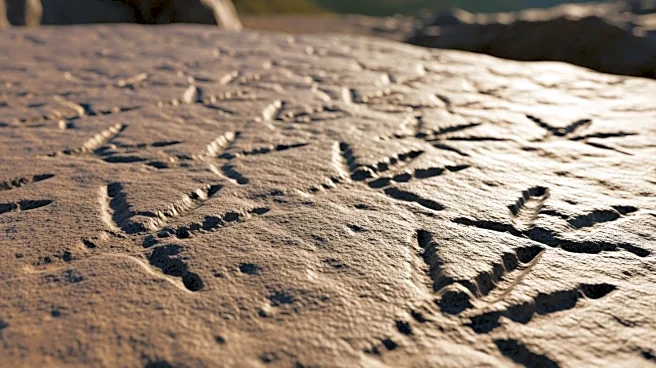
A significant paleontological discovery has been made near the 2026 Milan Cortina Winter Olympics venue in Italy. Thousands of dinosaur footprints, dating back approximately 210 million years to the Triassic Period, have been found in Stelvio National
Park. The discovery was made by wildlife photographer Elio Della Ferrera, who initially set out to photograph local wildlife. The footprints, believed to be made by long-necked bipedal herbivores similar to Plateosaurus, are spread over three miles and number as many as 20,000. These tracks indicate that the dinosaurs traveled in packs and sometimes stopped in circular formations, possibly for protection. The location of the footprints, high on a north-facing wall, made them difficult to spot without specialized equipment.
Why It's Important?
This discovery is significant for both scientific and cultural reasons. Scientifically, it provides valuable insights into the behavior and movement patterns of dinosaurs during the Triassic Period. The sheer number of footprints offers a rare opportunity to study the social behavior of these ancient creatures. Culturally, the discovery near the upcoming Winter Olympics venue adds a unique historical dimension to the event, potentially attracting interest from both attendees and the global audience. The Lombardy regional governor has hailed the discovery as a 'gift for the Olympics,' highlighting its potential to enhance the cultural significance of the games.
What's Next?
While the site is too remote to access during winter, plans for eventual public access are anticipated. This could involve creating pathways or viewing platforms to allow visitors to experience the footprints firsthand. The discovery may also prompt further scientific exploration in the area, potentially uncovering more prehistoric artifacts. Additionally, the integration of this discovery into the Olympics could involve educational programs or exhibits to inform visitors about the historical significance of the site.
Beyond the Headlines
The discovery raises questions about the preservation and protection of such sites, especially in areas of high tourist activity like the Olympics venue. Ethical considerations regarding the balance between public access and conservation will need to be addressed. Furthermore, the footprints could inspire cultural and artistic interpretations, potentially influencing local and international art and media.