





What's Happening?
House Transportation and Infrastructure Committee Chairman Rep. Sam Graves (R-MO) has been a key proponent of the BUILD America 250 Act, a five-year transportation funding bill currently under consideration in Congress. This bipartisan proposal aims to
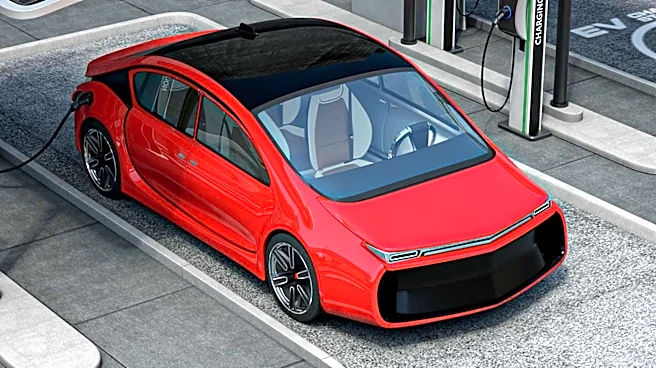
invest significantly in highways, bridges, transit, rail, and freight programs. A central feature of the bill is the introduction of a new annual federal registration fee for electric vehicles (EVs) and plug-in hybrids. Specifically, the bill proposes a $130 annual fee for EVs and a $35 fee for plug-in hybrids. This measure is designed to address a long-standing funding gap in the Highway Trust Fund, which has historically relied on gasoline and diesel taxes. With EVs not contributing through these fuel taxes, the fund has seen a widening deficit as EV adoption increases. The bill allocates $376 billion for Federal Highway Administration programs, $87.6 billion for transit, $5.7 billion for highway safety, and $5 billion for motor carrier safety, alongside additional funding for rail and bridge projects. The current funding authorization is set to expire on September 30, creating a firm deadline for congressional action.
Why It's Important?
The BUILD America 250 Act is critical for the U.S. economy and infrastructure. Highway congestion currently costs U.S. manufacturers an estimated $25 billion annually, adding 65 million hours to the time it takes to move goods. This bill seeks to alleviate these delays by strengthening core infrastructure and addressing bottlenecks. The proposed EV fee is particularly significant as it represents the first new revenue source for the Highway Trust Fund in over three decades. This change aims to ensure that all vehicles using the nation's roads contribute to their maintenance, rather than disproportionately relying on gasoline and diesel purchases. As electric vehicles are projected to constitute a substantial portion of new car sales in the coming years, this new funding mechanism is vital for the long-term solvency of the trust fund. The bill's investments are expected to reduce freight costs, improve delivery times, and simplify project schedules for industries like foodservice equipment distributors, who are directly impacted by transportation efficiency. Furthermore, the bill includes provisions for rural and urban transportation projects, autonomous commercial motor vehicles, and enhanced rail safety, all of which contribute to a more robust and efficient national transportation network.
What's Next?
The BUILD America 250 Act has successfully cleared the House Transportation and Infrastructure Committee, but it still requires passage by the full House and the Senate. Lawmakers face a deadline of September 30, when the current surface transportation authorization expires. While business advocacy groups are pushing for a long-term funding bill, a short-term extension remains a possibility if negotiations for the BUILD America 250 Act extend beyond the deadline. The bill's strong bipartisan support in committee suggests a potential path forward, but compromises between the House and Senate may be necessary to secure its enactment. Stakeholders, including manufacturers, distributors, and the trucking industry, are closely monitoring the legislative process, as the bill's outcome will directly impact freight costs, delivery schedules, and the overall efficiency of the U.S. supply chain. The bill also includes provisions for improved truck parking and federal apprenticeship programs for drivers, which are critical for addressing labor shortages and improving working conditions in the trucking sector.
Beyond the Headlines
Beyond its immediate economic and infrastructural impacts, the BUILD America 250 Act signals a significant shift in how the U.S. plans to fund its transportation infrastructure in an era of increasing electric vehicle adoption. The introduction of a dedicated EV fee establishes a precedent for user-based funding models that adapt to evolving automotive technologies. This move could spark broader discussions about equitable contributions to public infrastructure from all users, regardless of their vehicle's propulsion system. The bill's focus on streamlining project review and permitting processes also highlights a deeper commitment to reducing bureaucratic hurdles that often delay critical infrastructure development. This could lead to more efficient project execution and a faster realization of economic benefits. Furthermore, the emphasis on addressing freight bottlenecks and improving conditions for truck drivers underscores a recognition of the vital role the logistics sector plays in national prosperity. The long-term implications could include a more resilient supply chain, reduced environmental impact through improved traffic flow, and a more sustainable funding model for future transportation needs.