







What's Happening?
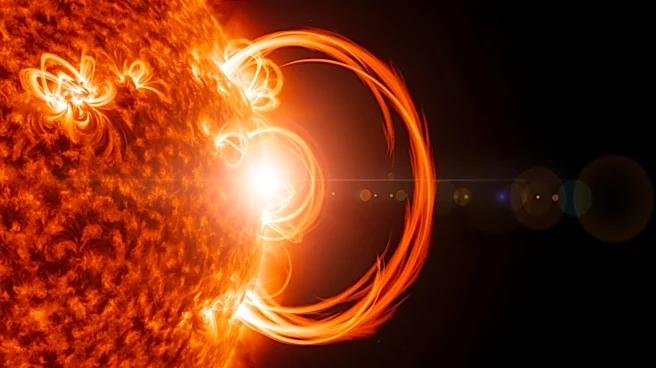
The National Oceanic and Atmospheric Administration (NOAA) has issued a strong G3 geomagnetic storm warning for June 4 through June 5 due to multiple coronal mass ejections (CMEs) heading towards Earth. These CMEs were launched by powerful eruptions from
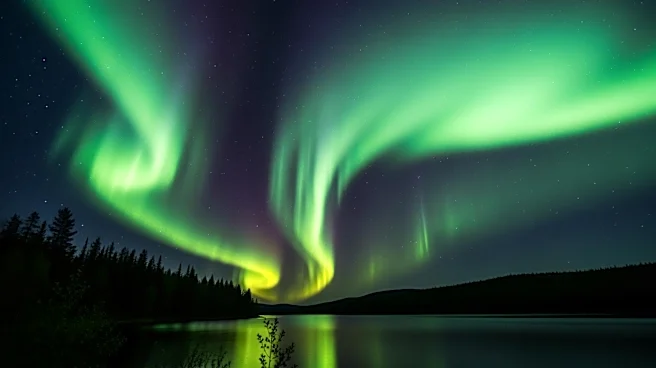
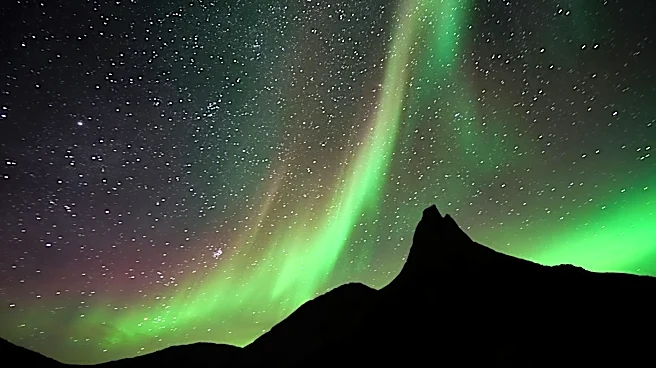
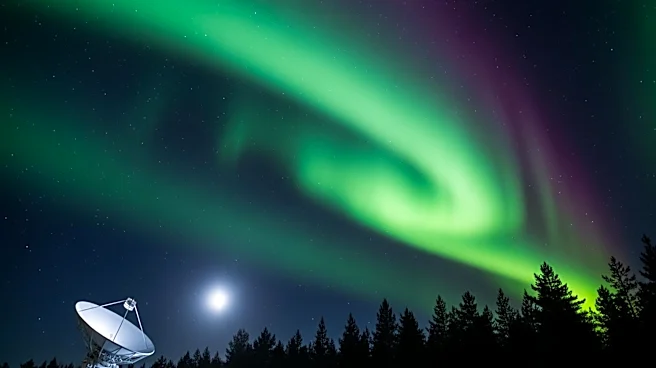
sunspot region 4455, which included an M9.3 flare, an M7.7 flare, and an X1-class flare within a 24-hour period. The resulting geomagnetic activity is expected to peak during the evening and overnight hours, potentially making auroras visible as far south as Illinois and Oregon. NOAA forecasters anticipate the CMEs to arrive from mid-to-late June 4 through June 5, with the possibility of some merging into a 'cannibal CME,' which could intensify the storm's impact.
Why It's Important?
This geomagnetic storm warning is significant as it could lead to visible auroras in regions not typically known for such phenomena, providing a rare opportunity for skywatchers in mid-latitudes. The potential merging of CMEs into a 'cannibal CME' could further intensify the storm, affecting satellite operations, GPS systems, and power grids. Such geomagnetic storms can disrupt communication systems and pose challenges to infrastructure reliant on satellite technology. The event underscores the importance of monitoring space weather and preparing for potential disruptions in technological systems.
What's Next?
As the CMEs approach, scientists will continue to track their progress and update forecasts. The timing and intensity of the storm could shift, requiring adjustments to predictions. Stakeholders such as satellite operators and power grid managers may need to implement precautionary measures to mitigate potential disruptions. Skywatchers are advised to check real-time forecasts and use space weather apps to optimize viewing opportunities. The situation highlights the need for ongoing research and preparedness in managing the impacts of space weather on Earth.
Beyond the Headlines
The occurrence of such geomagnetic storms raises questions about the long-term implications of solar activity on Earth's technological systems. As reliance on satellite technology grows, understanding and predicting space weather becomes increasingly crucial. The event also offers an opportunity to engage the public in science and astronomy, fostering interest in space weather phenomena and their effects on daily life. It highlights the interconnectedness of solar activity and terrestrial technology, prompting discussions on resilience and adaptation strategies.