







What's Happening?
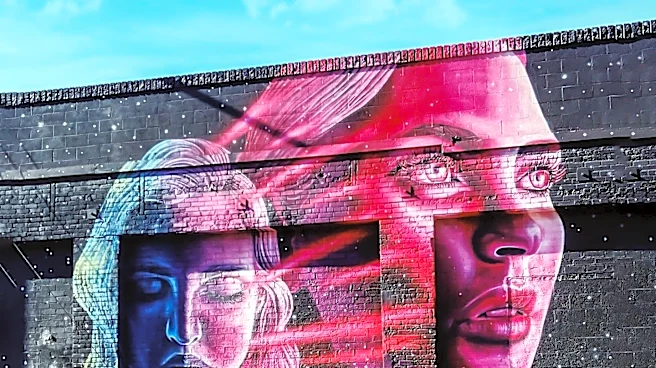
Two community murals on the exterior of a building in East San Jose were painted over by the new owner, Martha's Kitchen, approximately a year after the purchase. The nonprofit ConXión, the previous owner, expressed significant disappointment, stating
that the murals held historical and cultural significance, with one created in collaboration with Native American and Latino youth in an after-school program. ConXión's President and CEO, Lori Chávez, claims that during negotiations for the building's sale in 2025, Martha's Kitchen agreed to preserve the murals. However, Martha's Kitchen Executive Director Bill Lee disputes this, asserting that no such conversation occurred and that ConXión was informed in October of the intent to paint over them. Lee stated that the exterior needed painting and the murals did not align with Martha's Kitchen's mission of feeding the hungry and homeless.
Why It's Important?
This incident highlights a conflict between cultural preservation and property ownership rights, particularly in communities where public art serves as a vital expression of identity and history. The removal of the murals, especially one created with local youth, can be perceived as a disregard for community values and contributions. For organizations like ConXión, these murals are more than just art; they are educational tools and symbols of heritage. Conversely, Martha's Kitchen, a nonprofit focused on addressing food insecurity, emphasizes its need for its property to reflect its mission. The disagreement underscores the challenges in balancing the aesthetic and cultural desires of a community with the operational and branding needs of new property owners, potentially leading to a loss of public art that tells the story of a neighborhood.
What's Next?
Martha's Kitchen plans to replace the removed murals with new artwork that better reflects its mission, focusing on themes of food cultivation, preparation, and consumption. San Jose City Councilman Bien Doan has expressed disappointment over the murals' removal and hopes that the new artwork will incorporate imagery representative of the area's youth and indigenous residents. This suggests a potential for future collaboration or at least a consideration of community input in the new artistic endeavors. The situation may also prompt discussions within the community and local government about policies or agreements to protect significant public art during property transfers, especially when such art is deeply embedded in the community's cultural fabric.
Beyond the Headlines
The controversy extends beyond the immediate painting over of murals, touching upon broader themes of gentrification, cultural displacement, and the evolving identity of urban spaces. Public art, particularly murals, often serves as a visual narrative of a community's past, struggles, and aspirations. When such art is removed without community consensus, it can be seen as erasing a part of that narrative, potentially alienating long-standing residents and cultural groups. This incident could spark a wider conversation in San Jose and other cities about the legal and ethical responsibilities of property owners regarding existing public art, and the need for clearer guidelines or protections to ensure that community-created and culturally significant artworks are preserved or appropriately relocated when property changes hands.