






What's Happening?
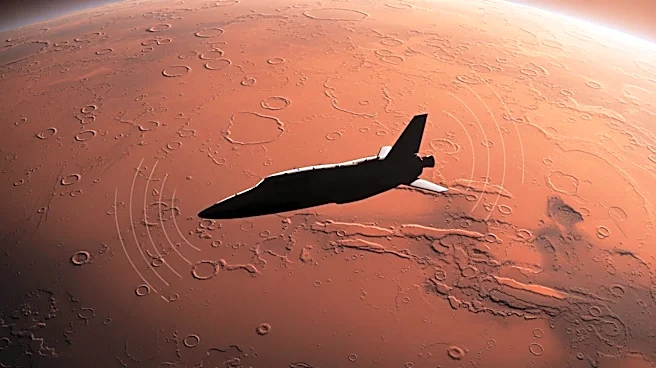
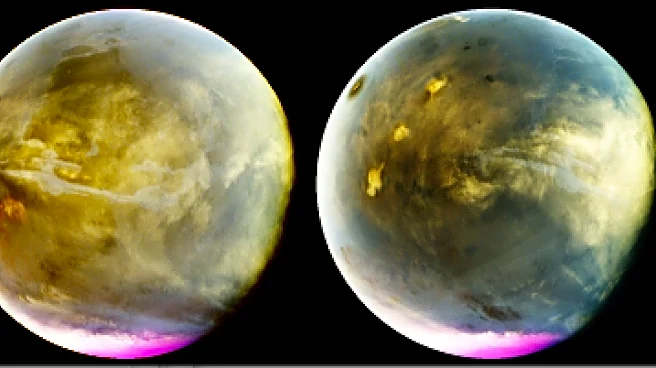
NASA has officially declared the end of its Maven spacecraft mission around Mars after the orbiter fell silent for six months. Launched in 2013, Maven was tasked with studying the Martian atmosphere. The spacecraft stopped communicating in early December
after passing behind Mars, and data suggested it went into a fast spin, disrupting its orbit and depleting its batteries. A review board concluded that the spacecraft is beyond recovery. Despite its current state, Maven is expected to remain in orbit for another 50 to 100 years before eventually crashing into Mars, posing no threat to other missions.
Why It's Important?
The conclusion of the Maven mission marks the end of a significant chapter in Mars exploration, as the spacecraft provided valuable data on the Martian atmosphere for over a decade. This information has been crucial for understanding the planet's climate and potential habitability. The loss of Maven highlights the challenges of long-term space missions and the need for robust systems to handle unexpected issues. The mission's end may prompt NASA to accelerate plans for future Mars missions to continue the study of the planet's atmosphere and support ongoing exploration efforts.
What's Next?
NASA will likely focus on analyzing the data collected by Maven to maximize the scientific return from the mission. Future Mars missions may incorporate lessons learned from Maven's technical challenges to improve spacecraft design and mission planning. Additionally, NASA and other space agencies may prioritize the development of new technologies to enhance communication and navigation for long-duration missions. The end of Maven could also influence funding and strategic decisions for upcoming Mars exploration projects.